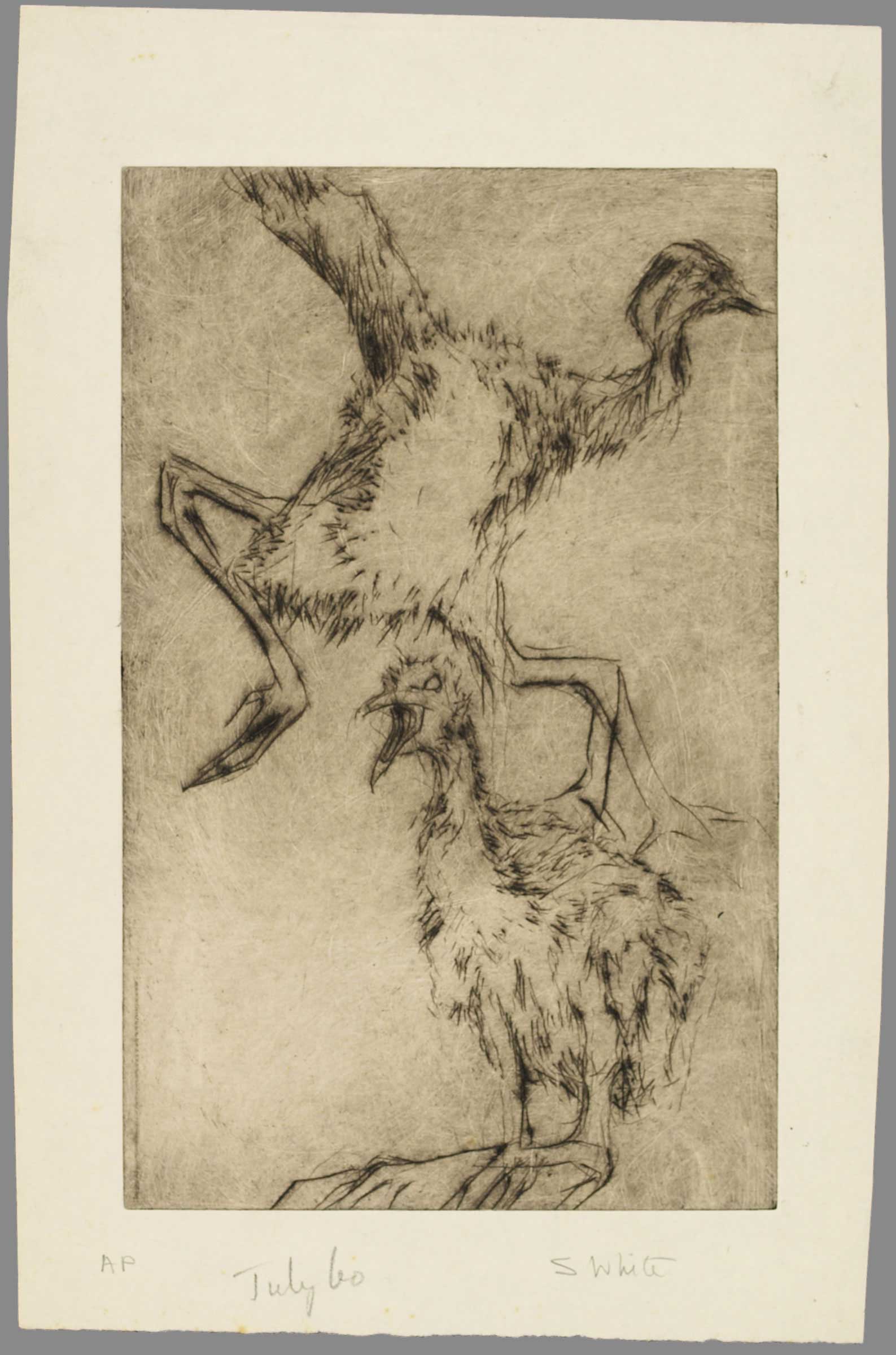
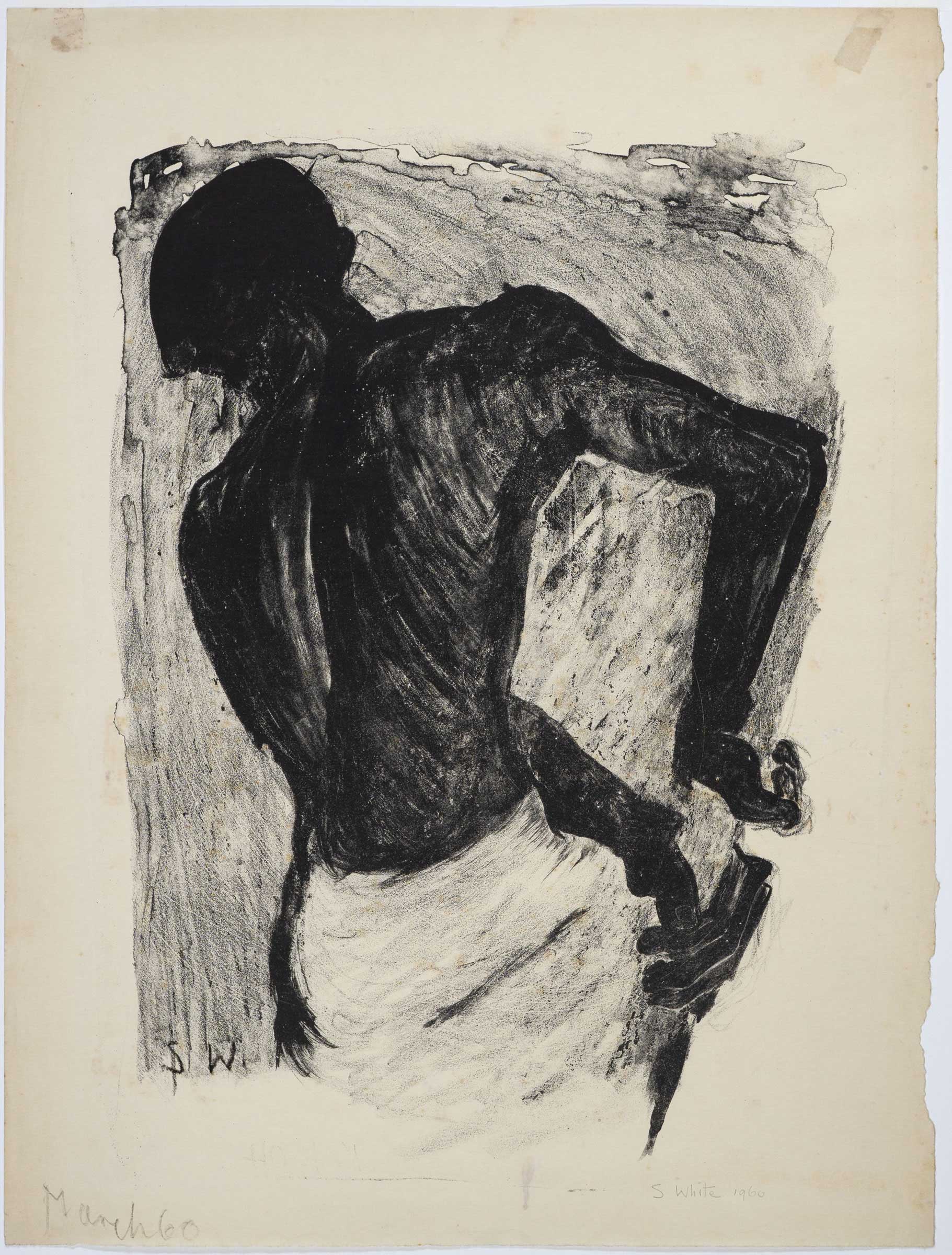
Hannah 2010a
Hannah, Cheryl, ed. Susan Dorothea White – Celebrating 50 Years of White’s Art in a Unique Survey of Her Prints 1960–2010. Braidwood: Fyre Gallery, 2010. (Type: Exhibition catalogue) » Download PDF 5.5 MBDirector’s Statement
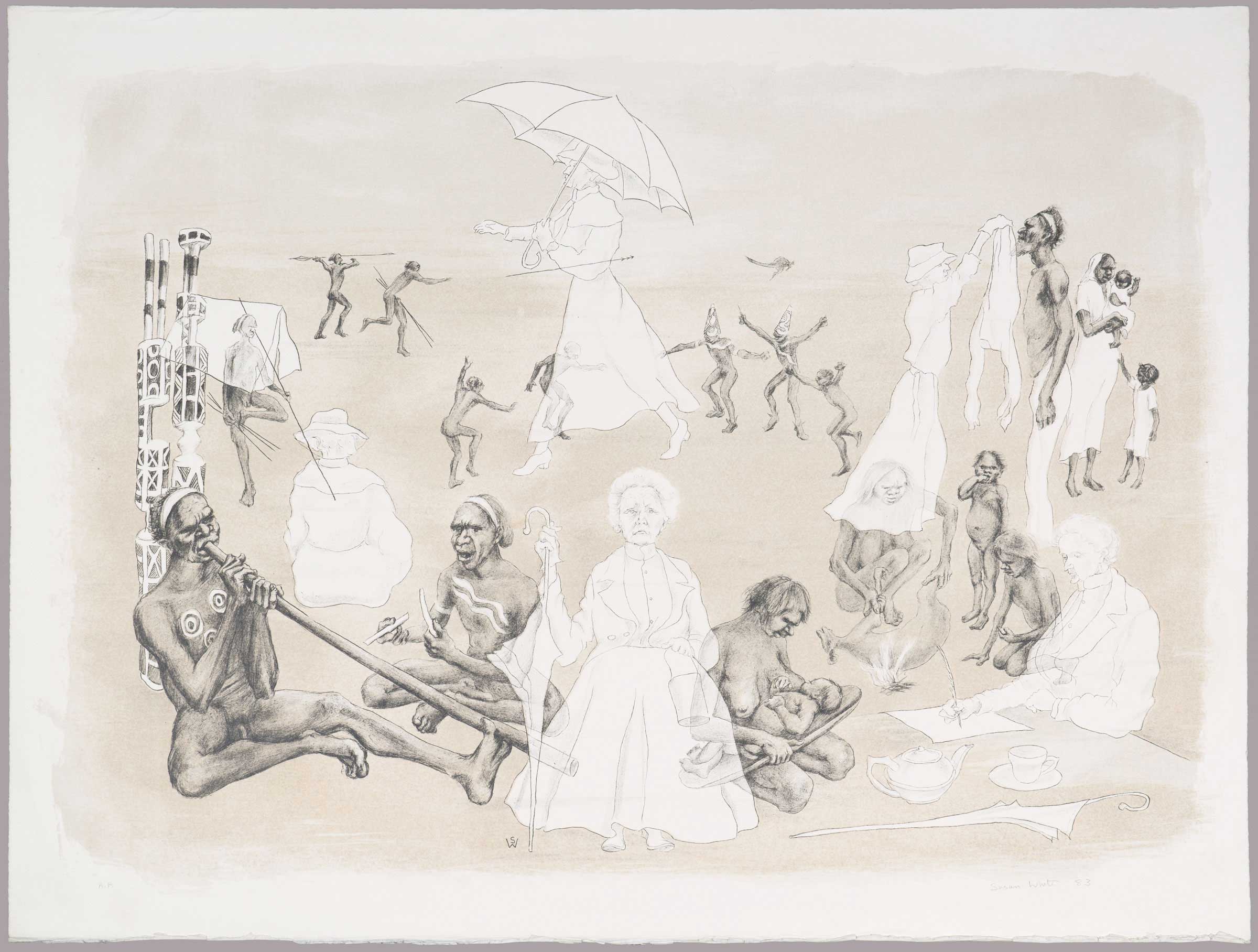
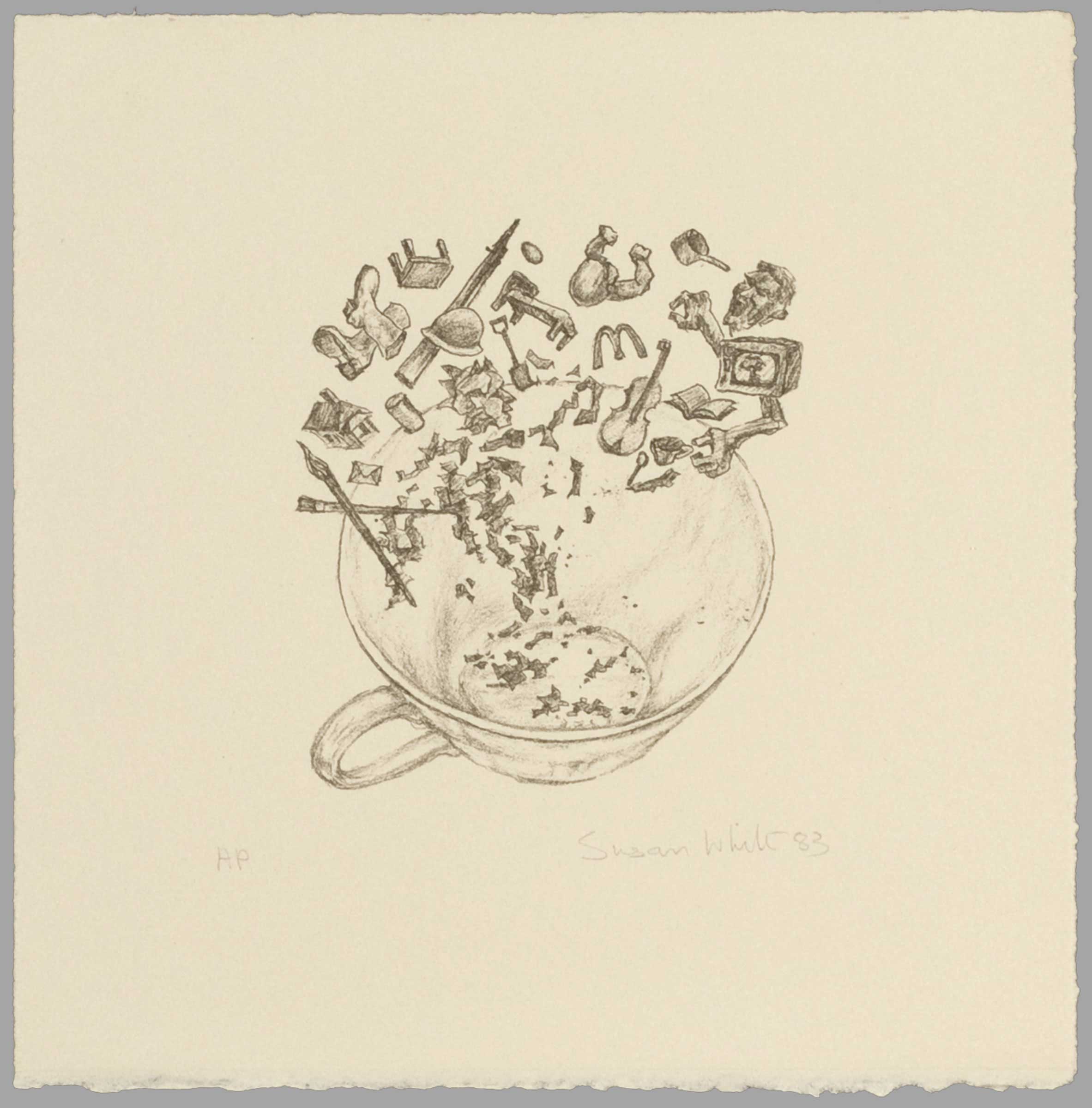
From the moment I saw my first White print, Storm in a Tea Cup, I was intrigued and captivated by the wit and skill of outstanding Australian multidisciplinary artist, Susan Dorothea White. These days she is better known as a sculptor and a painter so it is a tremendous privilege to show a survey of her prints stretching back over five decades. When asked what has sustained her art-making for more than 50 years, White says:
… my work is inspired by my passion for human rights issues, the environment, and by my love of family, art, and music...personal experience also fuels my creativity … For me Art is a way of life that I have pursued regardless of my circumstances. I gather inspiration from my experiences.2
Born in Adelaide, South Australia in 1941, White grew up in Broken Hill surrounded by family members who encouraged her love of art. Boarding school in Adelaide, beginning in 1954, showed White that she did not suit a regimented life and she pined for the school holidays when she would return home to paint and draw the outback landscape. At age 15 she decided on a career as an artist, choosing art over music, but remained at school to complete her Leaving Certificate.
She studied at the South Australian School of Art (SASA) in Adelaide, where she was awarded both the 1959 Fine Art and Drawing Prizes. Here she was fortunate to be taught by such well-known Australian artists as Dora Chapman and James Cant, who instructed her in painting and drawing and instilled in her a love of sketching from daily life. Her passion for lithography was ignited by the newly established Printmaking Department under Udo Sellbach; Jacqueline Hick taught her etching. Every term break, she returned home to Broken Hill to paint the outback landscape and portrait commissions.
The international swing towards abstract art in the early 60s did not suit White’s temperament and sensibilities, prompting her to leave SASA the middle of 1960 for Sydney to study fulltime at the Julian Ashton Art School under Henry Gibbons. She always went back home in the holidays to paint. Her first solo exhibition in 1962 in Broken Hill, comprising 60 works: paintings, drawings, lithographs and etchings, was a sell-out.
That same year White married and moved into lodgings in Paddington which she has described variously as “squalid” but undaunted by her days working in menial jobs, such as taking on shift-work selling newspapers at Sydney’s Wynyard station, she always found time to paint and draw. Her unswerving dedication to her inner muse is a profoundly important element in understanding the story of White’s creative life. Whether it was the mattress stacked upright against the wall to make space for painting large pictures, or later her determination to combine motherhood and art by finding ways to work from home dress-making or making paper flowers that she sold from the pram in the street, she never stopped thinking of herself as an artist. Her daughter had arrived on the scene in 1964, followed by a son a year later. Another son was born after the family moved to Glebe. Unlike so many of her fellow women artists for whom the demands of motherhood and child-rearing often stood in competition with their desire to create art, White maintains that rearing her three children did not prevent her from creating. She says rather
... the children, the joy of my life, provided inspiration and subject matter, [and] they still do, with the addition of grandchildren... my artist son is now my confidant in art.
Tragically much of White’s artwork was vandalised and destroyed around this time. Works that survived are those that were sold or happened to be with relatives.
A single parent by 1971, White was at last able to exhibit again. She worked as a waitress in the evenings and painted during the day for her solo exhibition at the Adelaide Festival of Arts in 1972. She says
...My bedroom was my studio!.
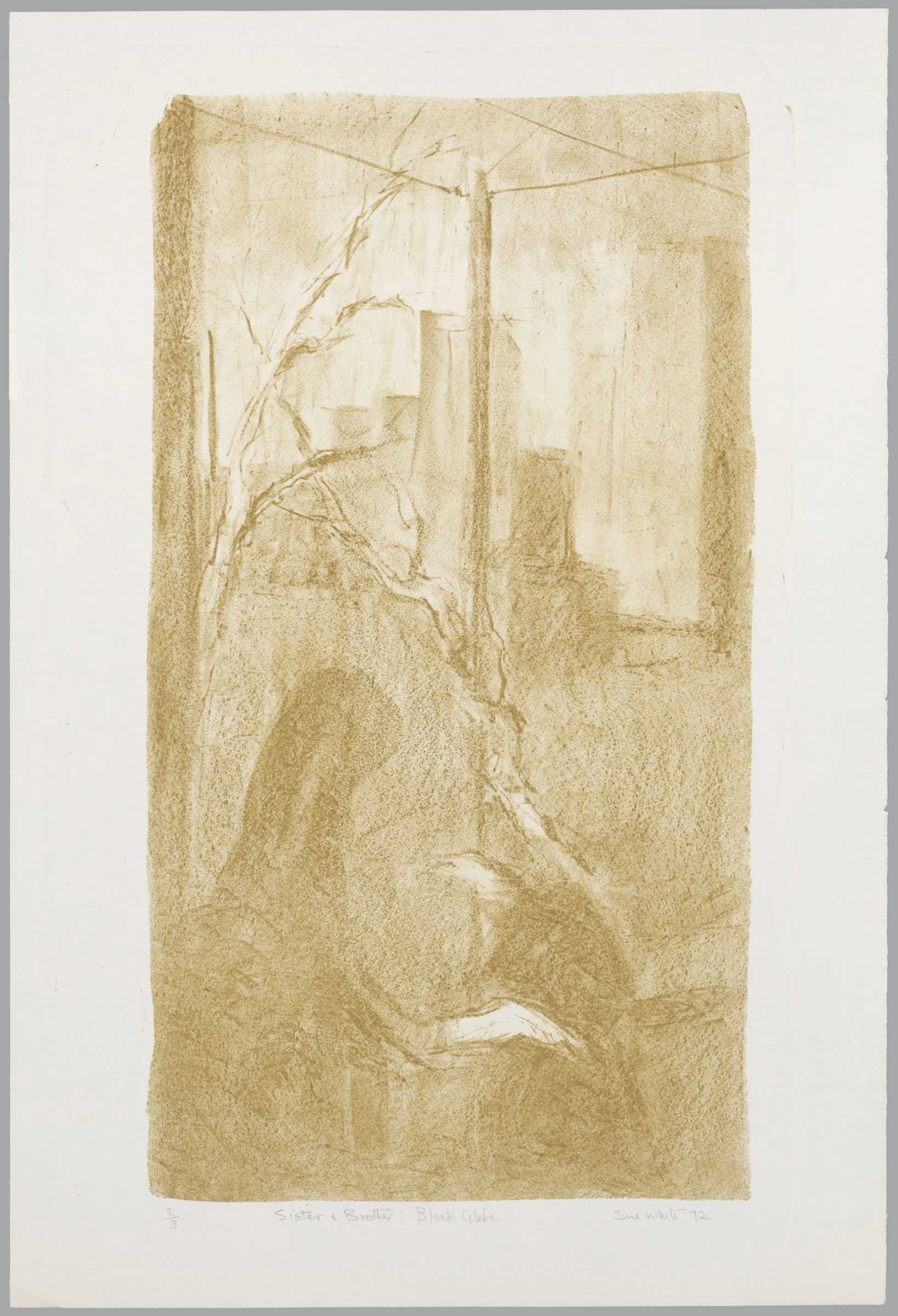
Around this time she also recommenced lithography at the Workshop Arts Centre, and from this period on, she exhibited continually in group shows around Australia. She met her current partner and in 1973 the family moved from Glebe to Annandale, where she began establishing a lithographic workshop in her studio, which by now had moved out of her bedroom to a space under the house. In a remarkable feat of domestic engineering White modified a hand-washing wringer and a plywood panel to use as a hand press until she could afford a “proper” printing press in 1975.
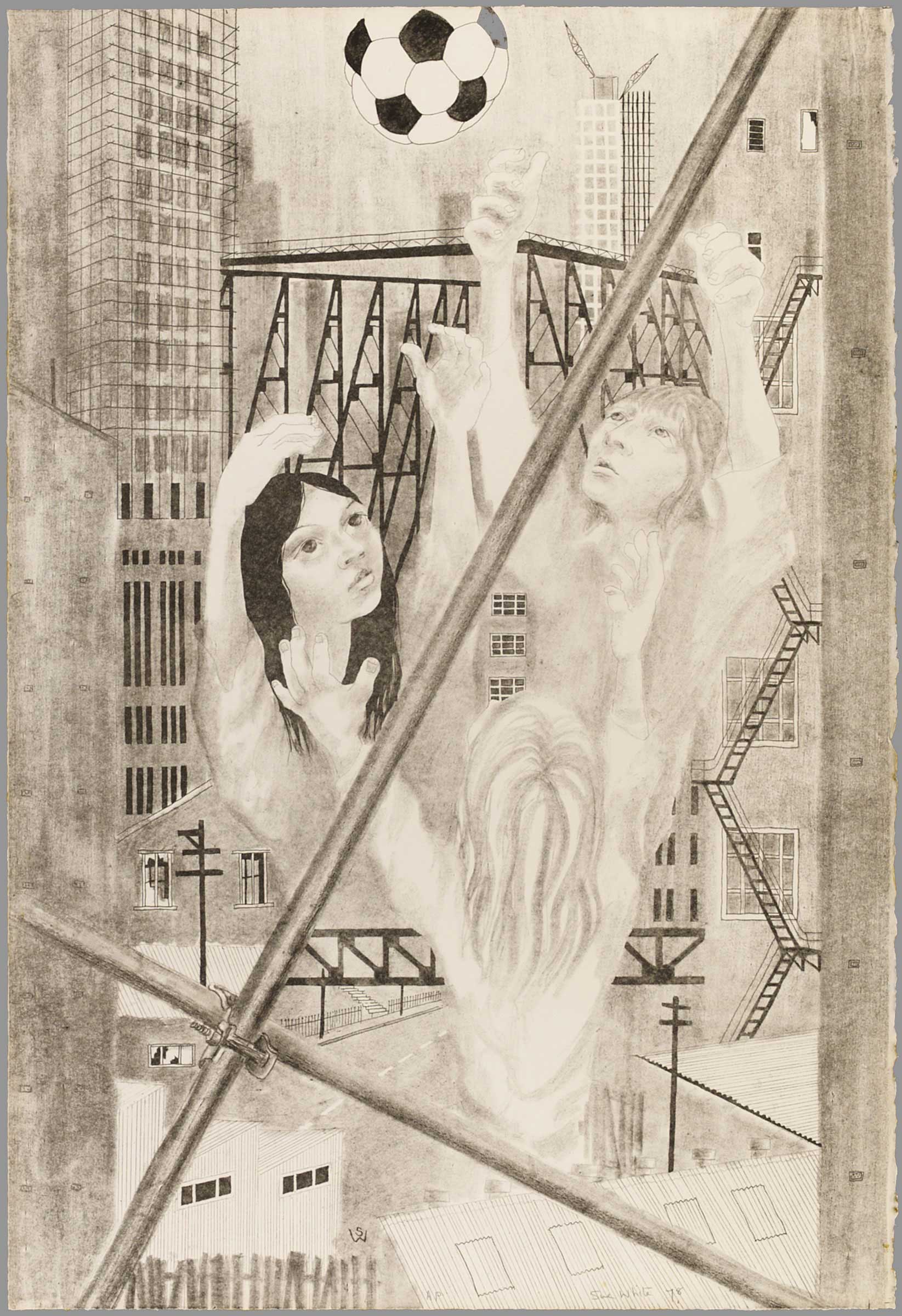
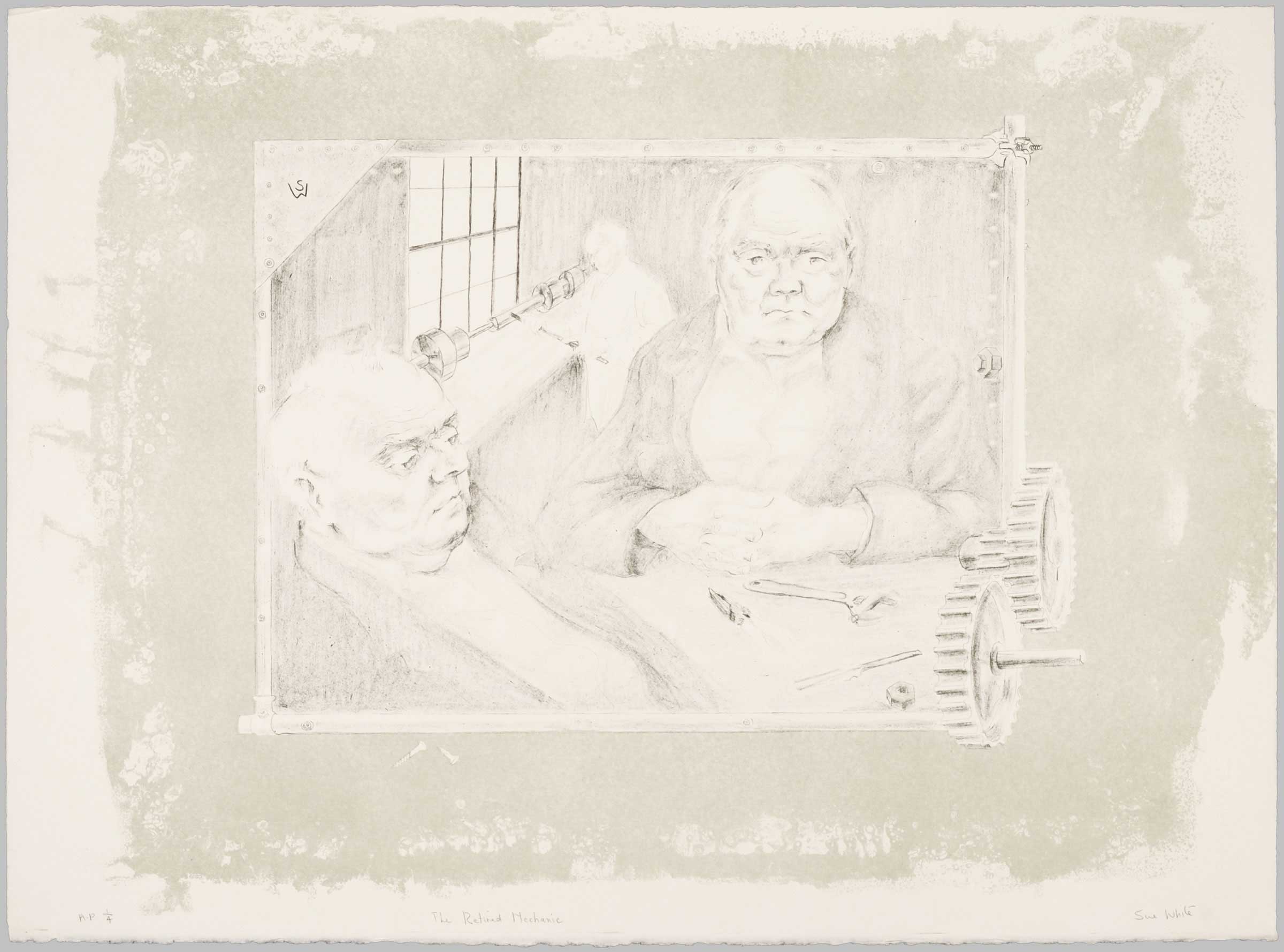
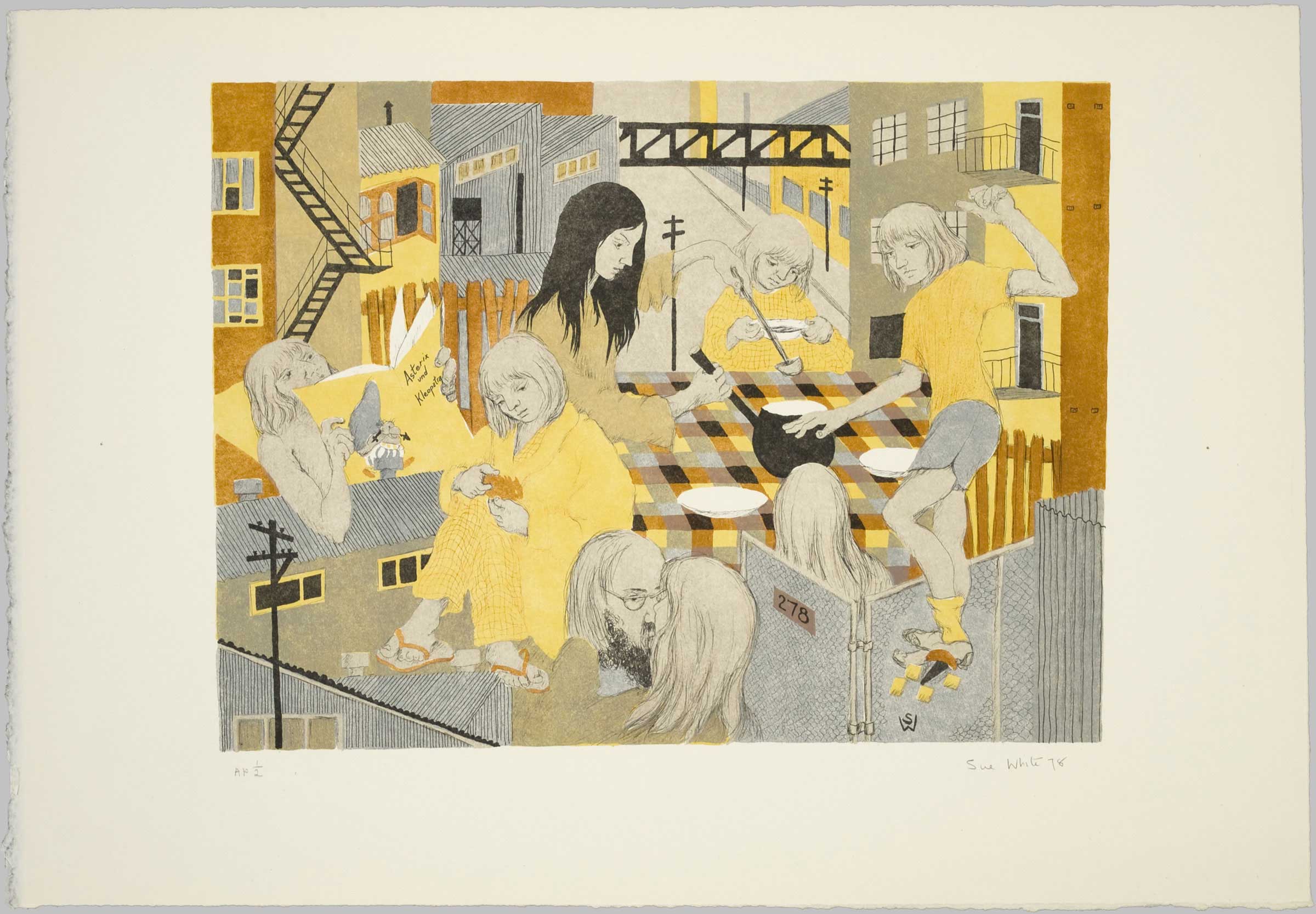
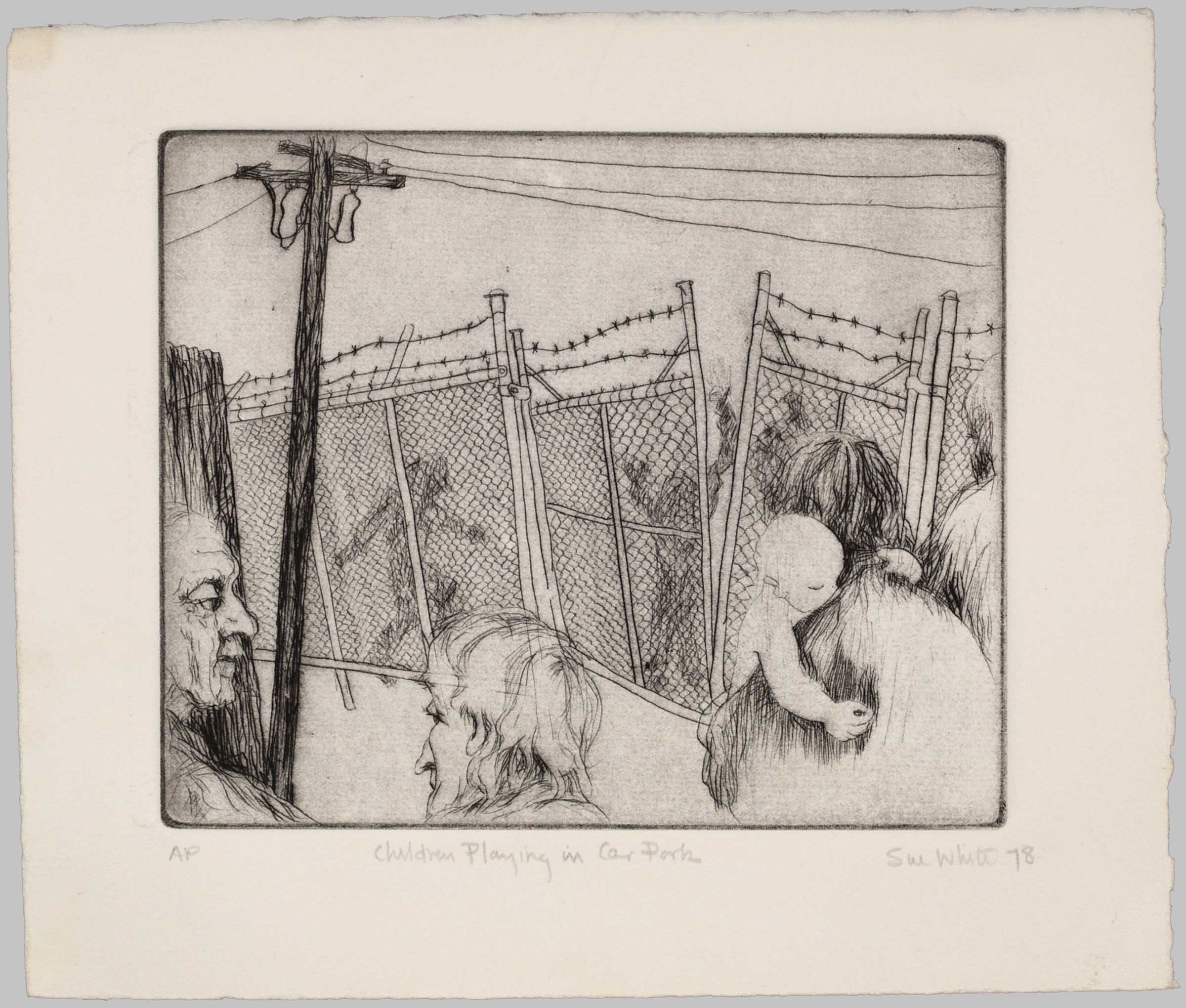
From 1977 to 1980 she exhibited paintings and prints in a continuously changing solo show at the University of Sydney Seymour Centre and held a solo exhibition of lithographs in Sydney in 1978. Following her six months in Germany with the family in 1979, she returned to Munich in 1980 for a solo show of her paintings, prints, and drawings. When back in Australia, she held an exhibition of watercolours depicting people at the Seymour Centre the same year. From 1980 onwards White’s lithographs and blockprints were selected by international jurors to represent Australia in print biennales and triennales around the world – in Japan, Italy, UK, Poland, Germany, France, Canada, USA, Spain, Netherlands, Yugoslavia, to name but a few. Between 1981 and 1991 her work was selected five times for the prestigious International Biennial of Graphic Art, Ljubljana. It is salutary to note that the same prints were often rejected from exhibitions in Australia.
From 1980 White went on to have many of her lithographs and blockprints accepted to represent Australia in numerous international exhibitions and biennales. For the NSW Women and Arts Festival in 1982, White co-ordinated an exhibition “Eight Women Artists” at the Glebe Town Hall.3 In the mid-1980s White took up sculpture again, carving wood and sandstone and working in bronze. She held a solo show of paintings, sculptures, prints and drawings in Sydney in 1986. A trip to Europe in 1989 led to a solo exhibition of paintings, sculptures, prints, and drawings in Amsterdam in 1990, followed by a solo show in Cologne in 1991. White lived in Europe for nine months during this time and also exhibited in group shows there, exhibiting in group shows in Europe and garnering a distinguished reputation for her socially progressive and sometimes confronting subject matter.
Controversial in Australia, her large painting The First Supper, was acclaimed by European critics. White says
...The Australian critic who ridiculed The First Supper in a review, when it was exhibited in the Blake Prize Exhibition, did me a favour by encouraging me to exhibit it in Europe.
The painting featured in Kunstbeeld and was purchased by a collector in Germany. White’s powerful image, with its lush table of multicultural feasting women, focused on a central figure of an Australian indigenous woman, continues to spark interest. In a thesis and 1999 research article, Dr. H. Shugart analysed The First Supper as a subversive postmodern ironic reading of Leonardo Da Vinci’s Last Supper.4
In 1994 White was invited to exhibit paintings, sculptures, and prints in a group show in New York, which was reviewed by the New York critic Dorothy Roatz Myers. Myers wrote
...White’s prints carry important sociological messages as exemplified by The Seven Deadly Sins, somber and serious, done entirely in black and white in a zodiac-like format. The center circle, ‘The Eye of Gaia Sees All’, is the core of the message. The seven deadly sins are illustrated in sections around the outside edge of the circle: they are self-effacement, workaholism, sycophancy, squandering, indifference, celibacy, and dieting. Her wry humor shows a bit here.5
Serious brain surgery in 1996 to remove a deep tumour (acoustic neuroma) failed to destroy White’s indomitable desire to create. Left with permanent hearing impairment and balance difficulties; her traumatic experience, and slow recovery, inspired several self-portraits. To improve her balance she took up Thai Chi and cycling, and by 1998 she was exhibiting again in New York (SoHo) with a solo show of paintings, sculpture, drawings and prints, also favourably reviewed by NY critics. Ed McCormack wrote
... Susan Dorothea White is an extraordinary artist and her exhibition at Montserrat is a truly magnificent show. I have not seen narrative paintings to compare with these in quite some time, perhaps never in recent times.6
The Hechinger Collection (Washington, DC) purchased her mixed-media assemblage It Cuts Both Ways, which was displayed in a long-term exhibition in the National Building Museum (Washington) from 2000 to 2004. She exhibited bronzes in Nice in 2000 and mixed-media assemblages in Florence in 2001. The Buhl Collection (New York) commissioned her to produce a large bronze sculpture of Stretching the Imagination, which was completed in 2005. The same year White was asked to produce a Masterclass Guide: Draw Like Da Vinci for Cassell, London (published 2006). Putting aside her usual art practice for seven months to write and illustrate this book, White produced over 100 artworks, including her wonderful Sex Change for Vitruvian Man, which demonstrates what happens to the golden section when woman enters the frame. The book is published in 4 languages including French and was highly rated in a review on www.about.com7
In 2000 she co-established the extraordinary anatomy drawing workshops (Step into Leonardo’s Shoes) at The University of New South Wales (School of Medical Sciences) where artists, students, and beginners in drawing had the opportunity to draw dissected human specimens. White herself has produced a large body of anatomical drawings. Such fundamental studies provide a wealth of authentic detail in many of White’s compositions involving the human figure across the spectrum of her media.
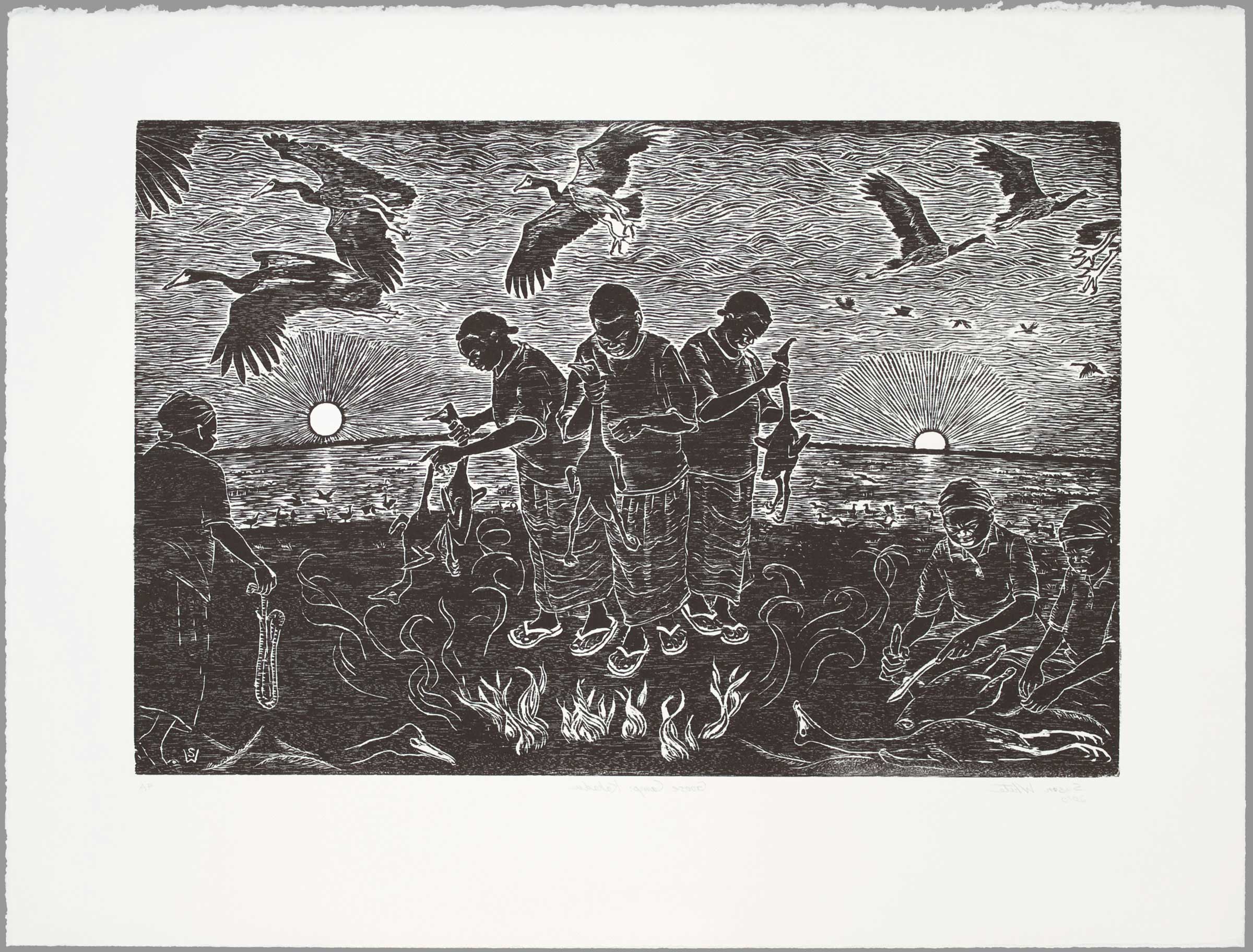
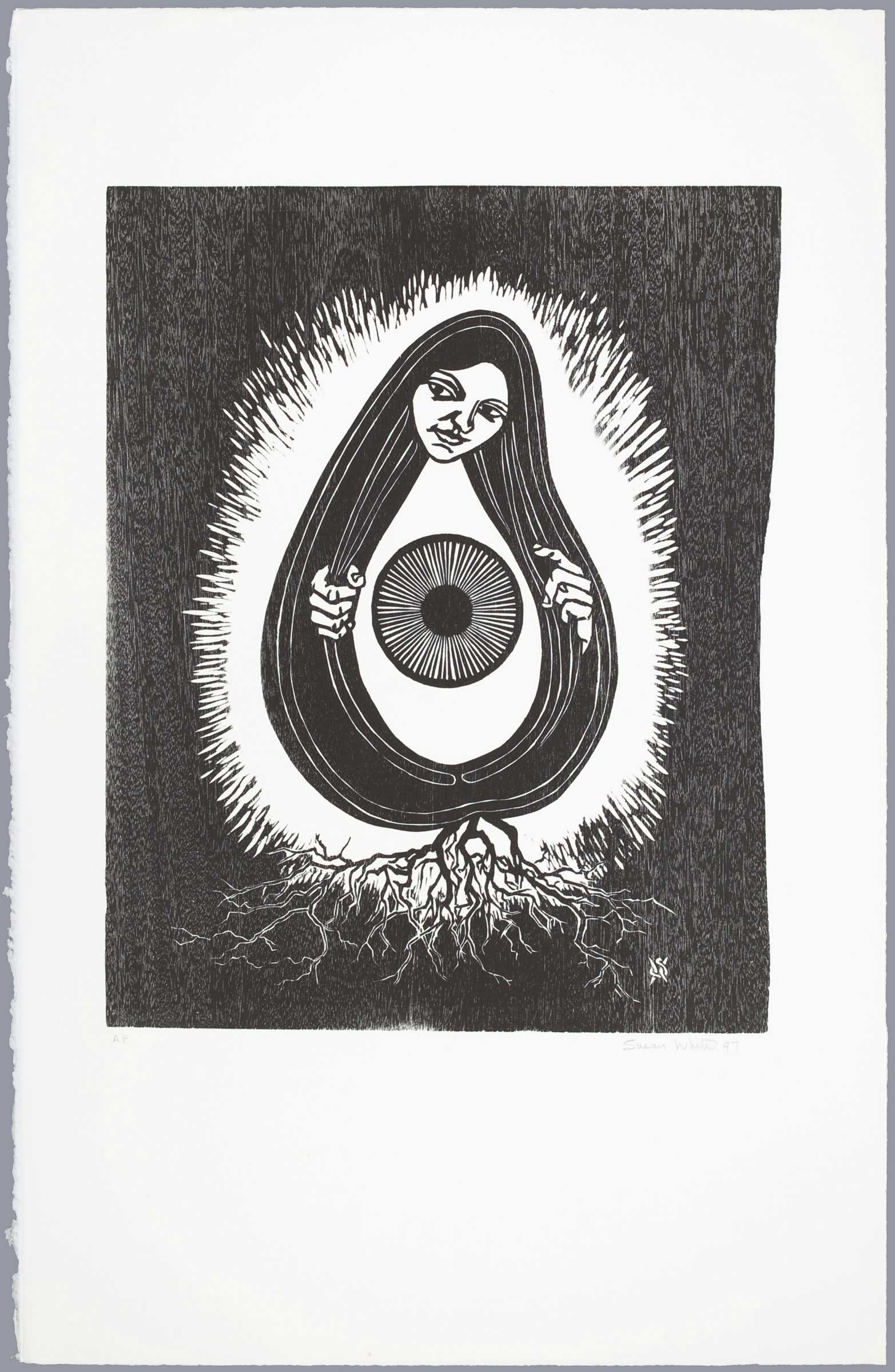
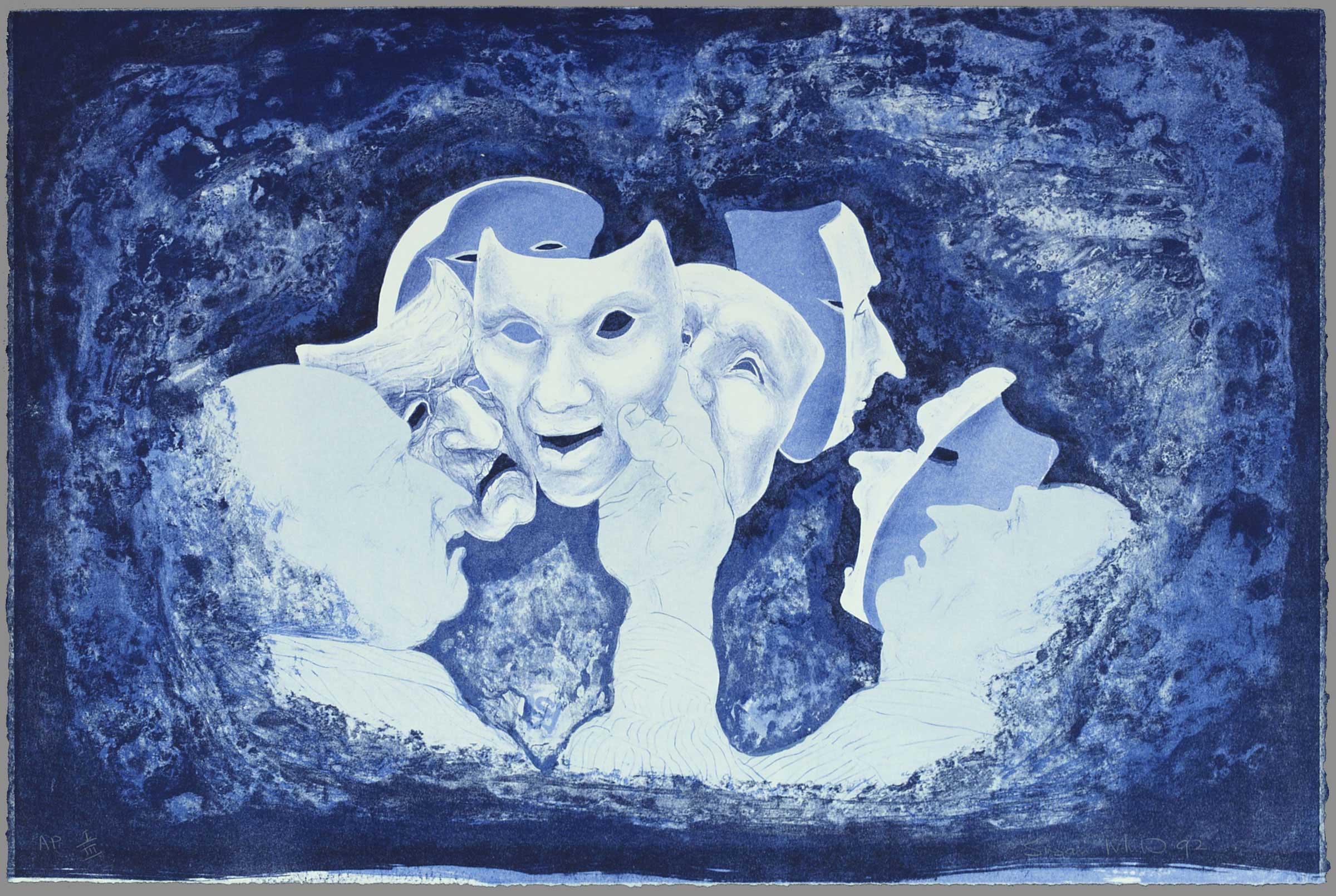
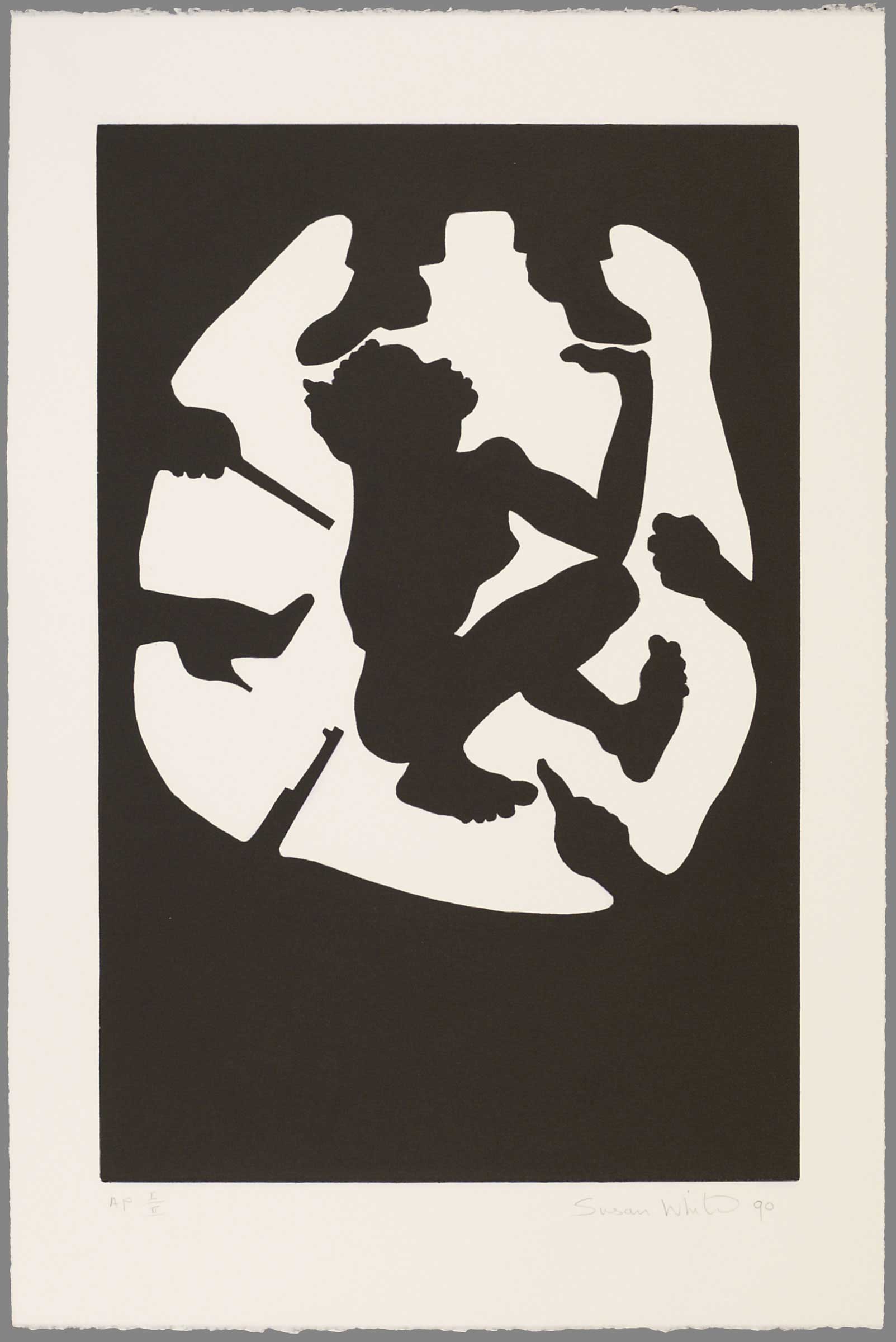
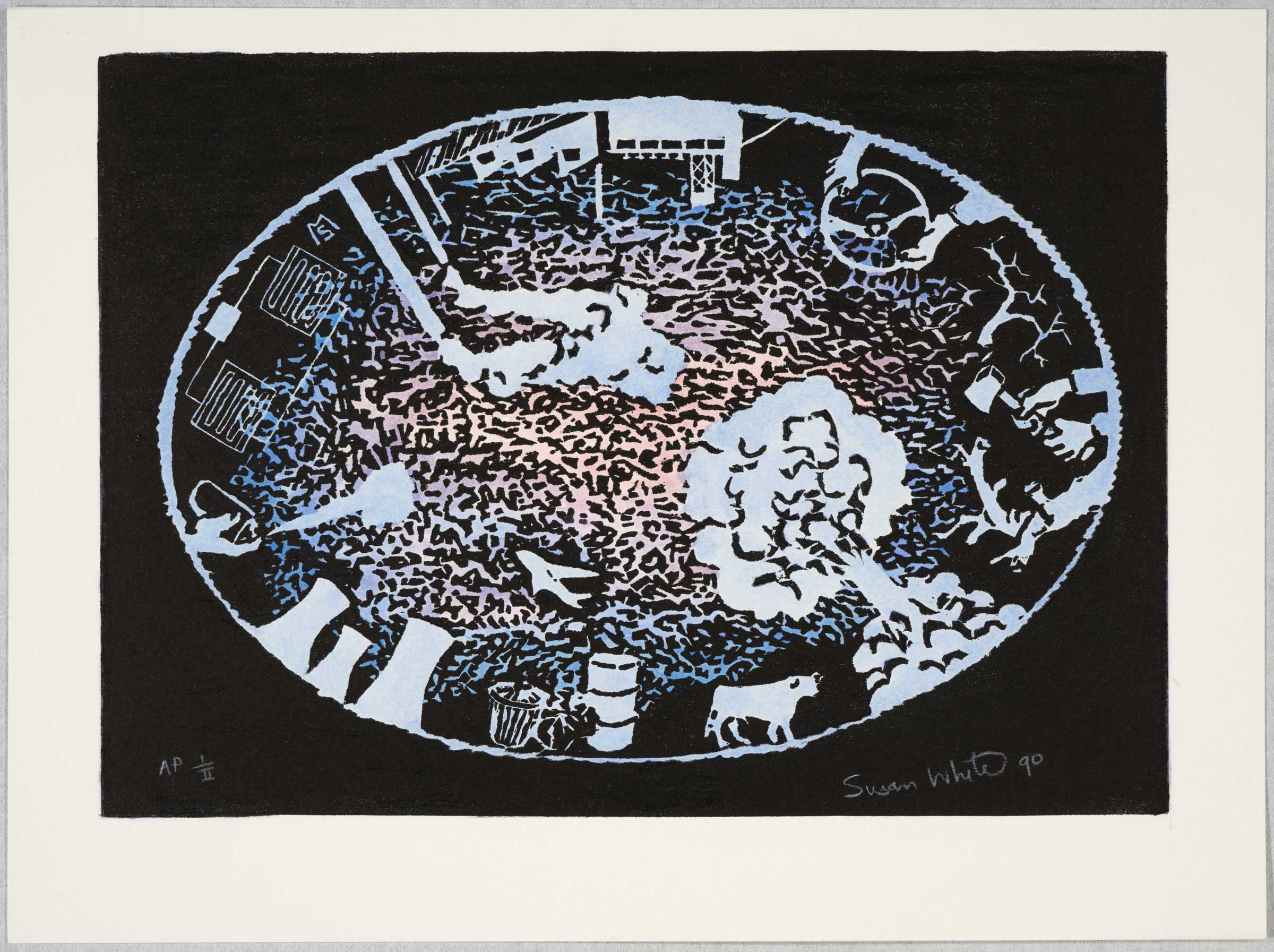
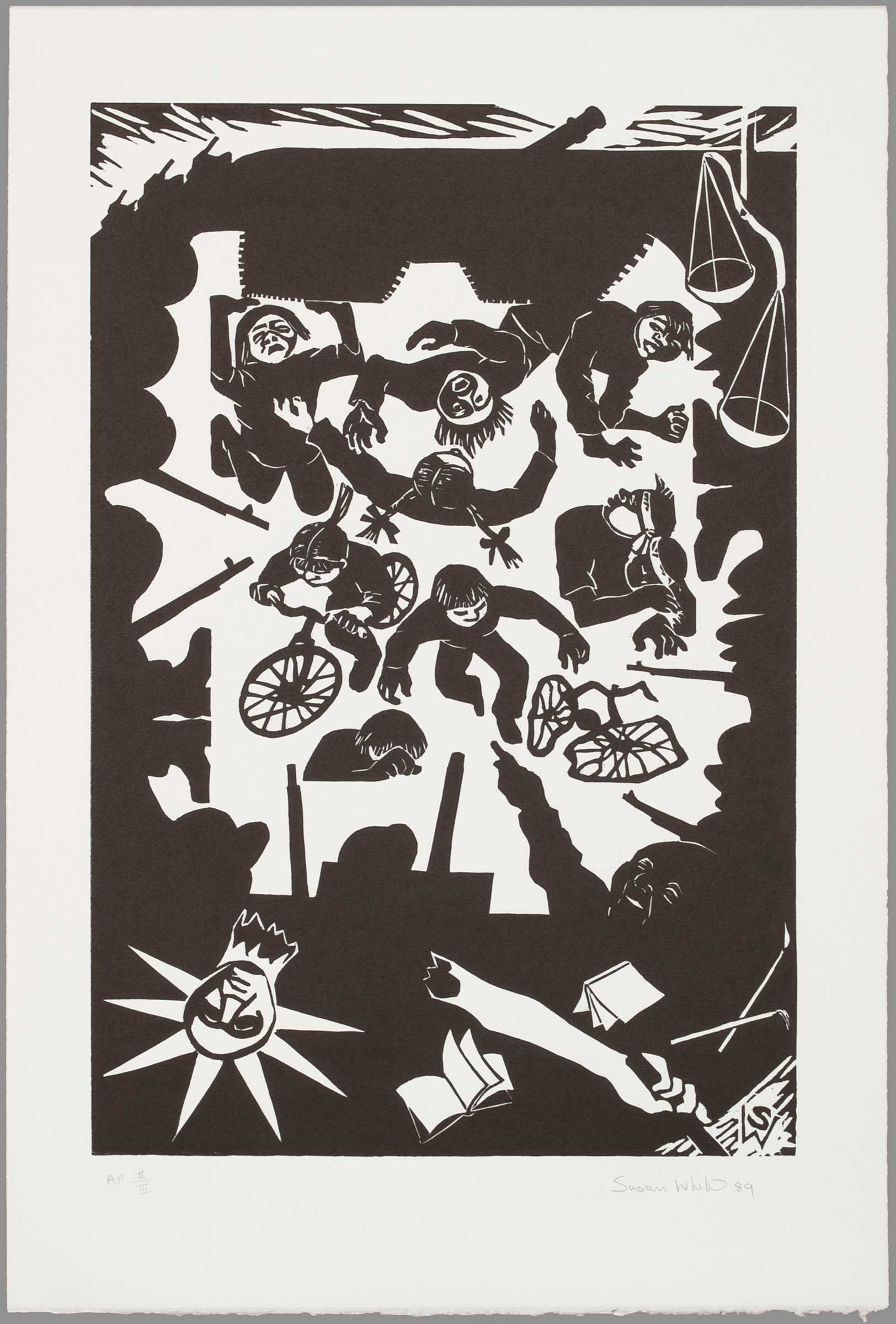
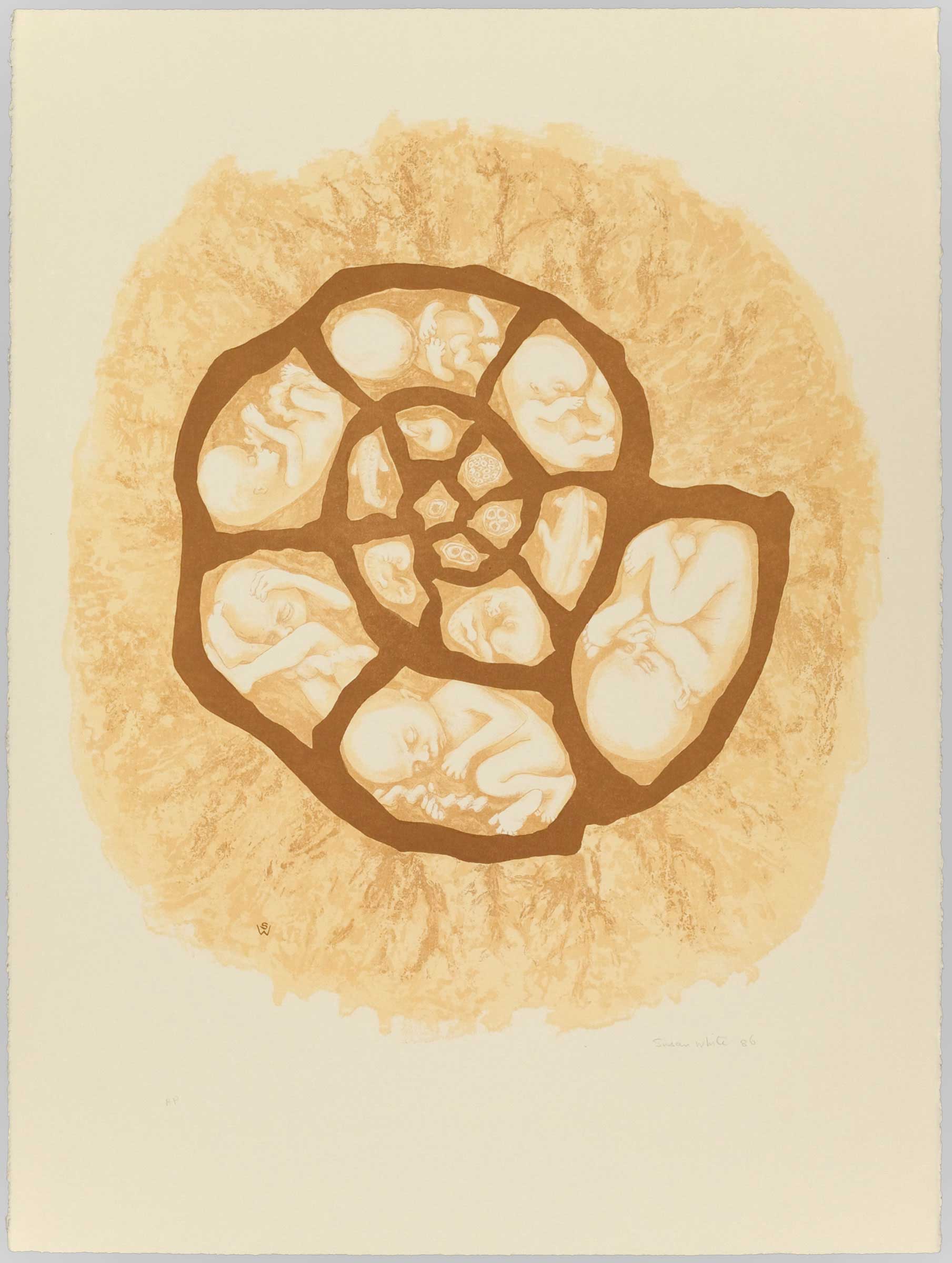
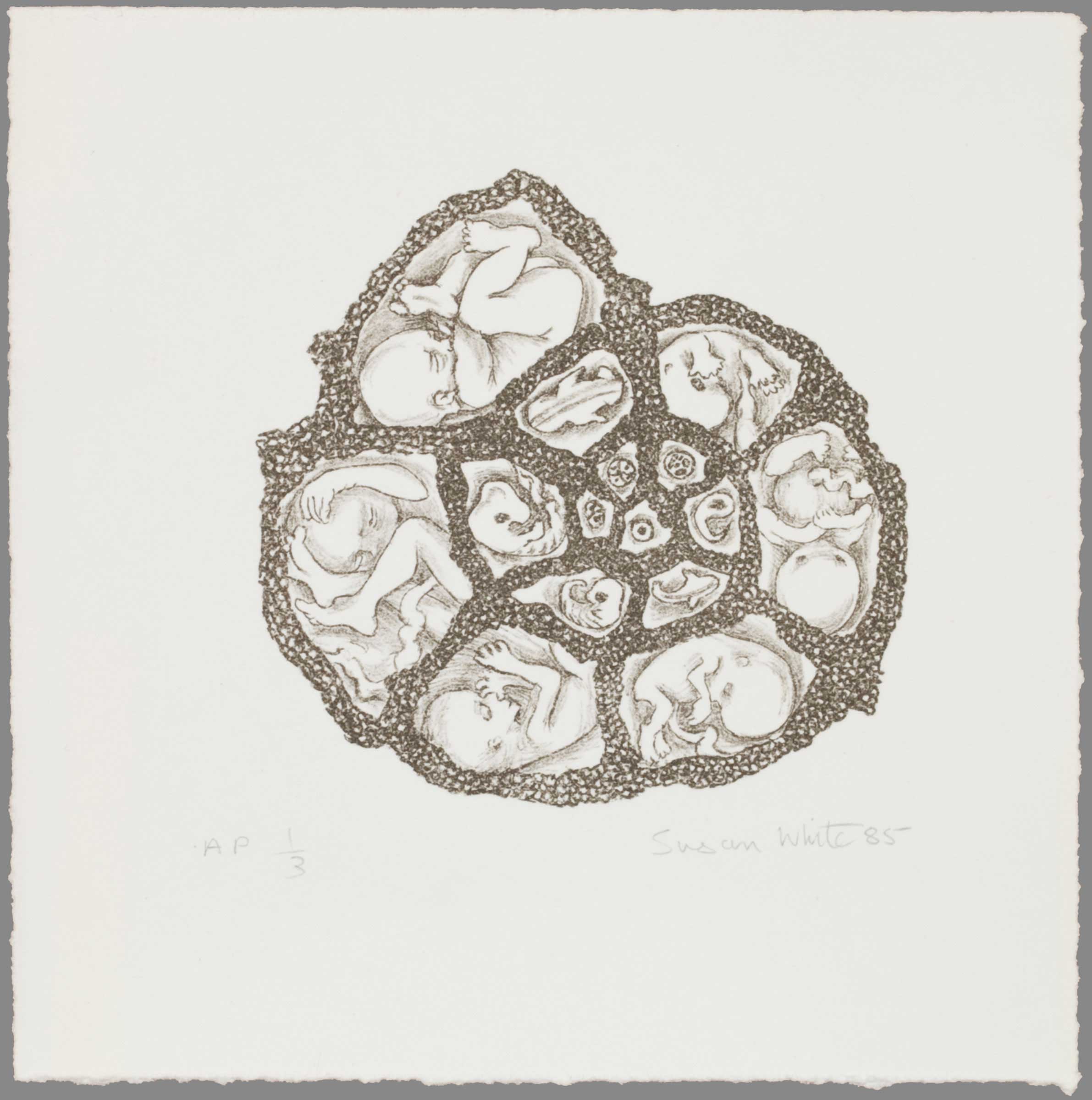
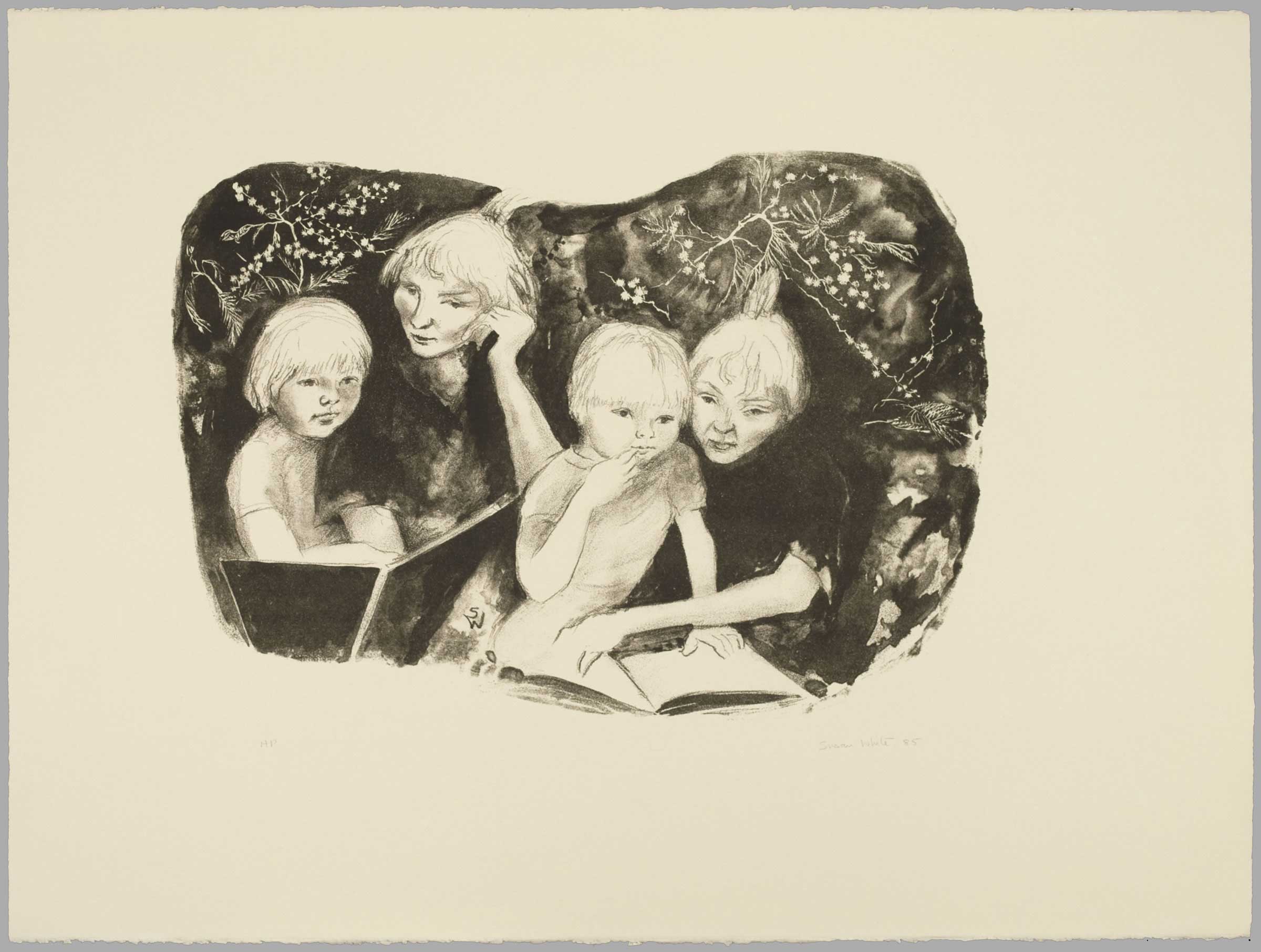
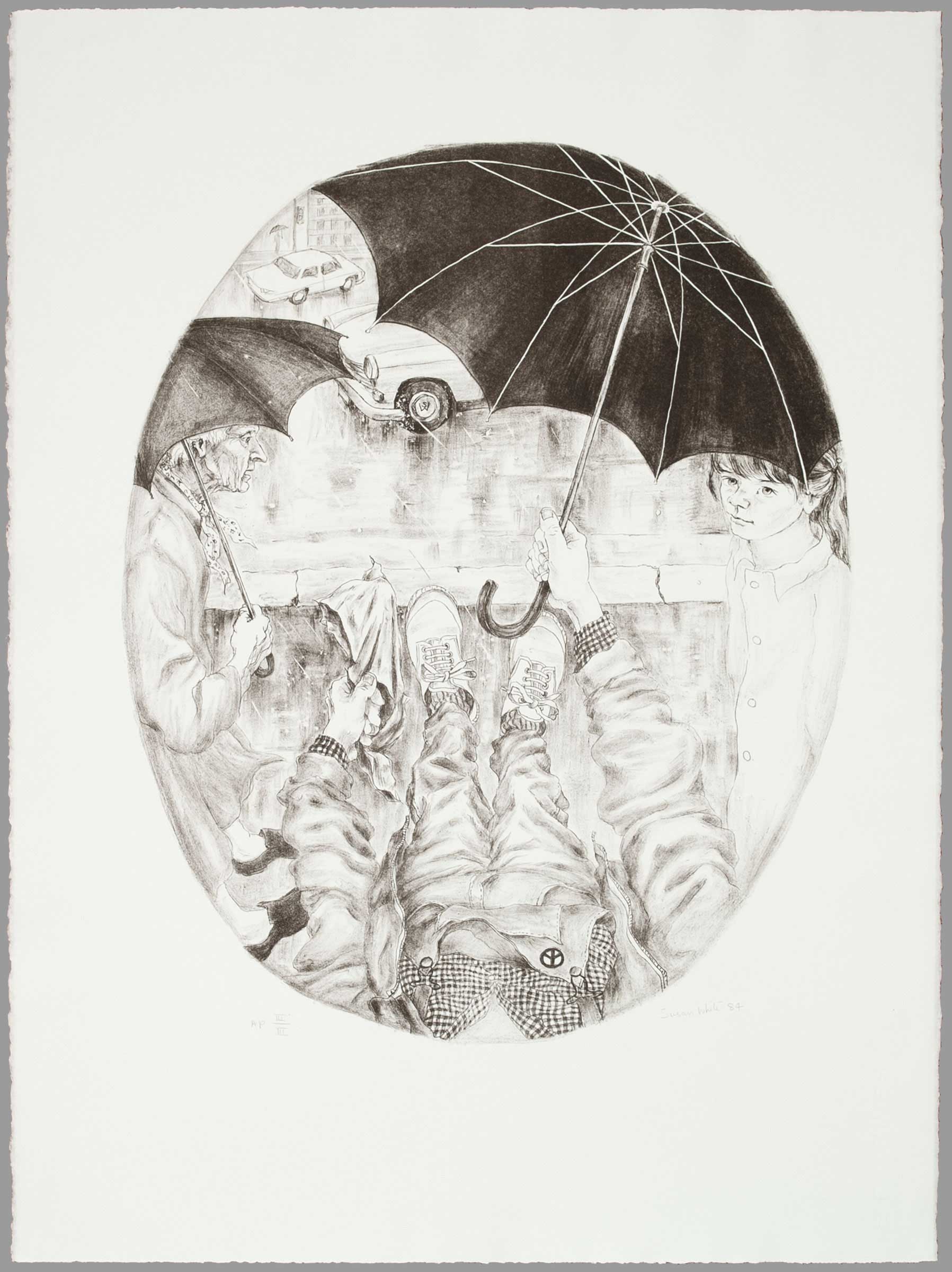
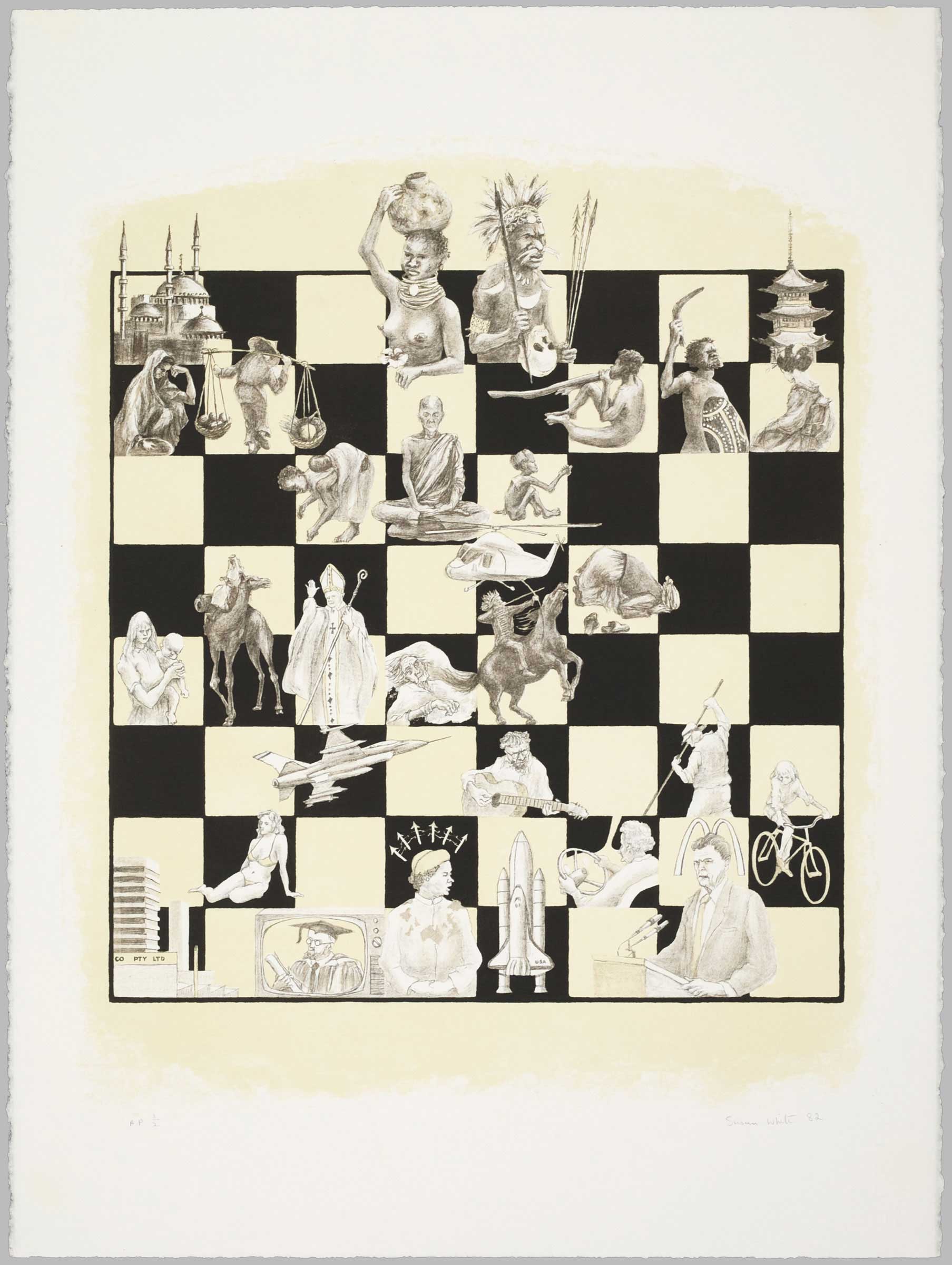
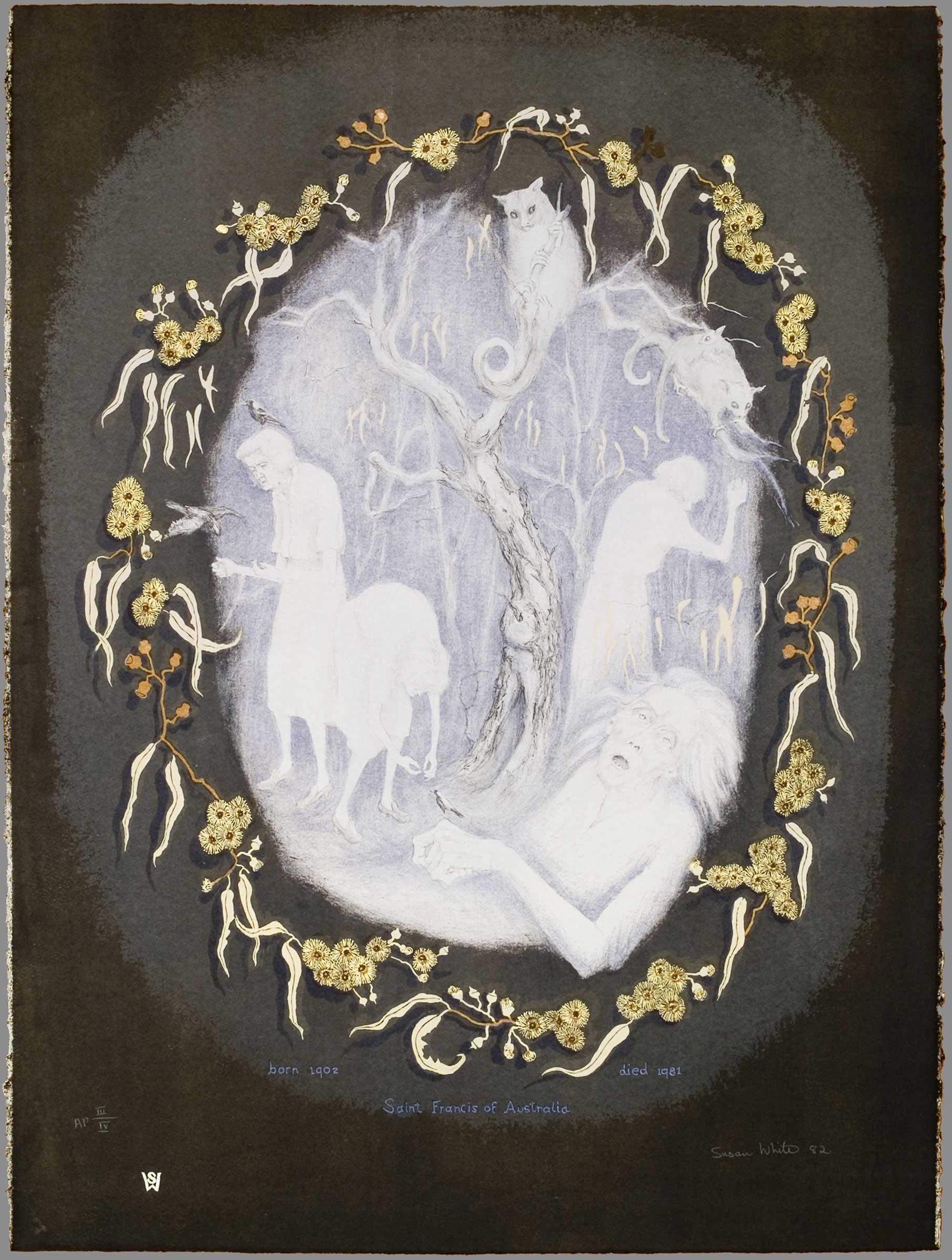
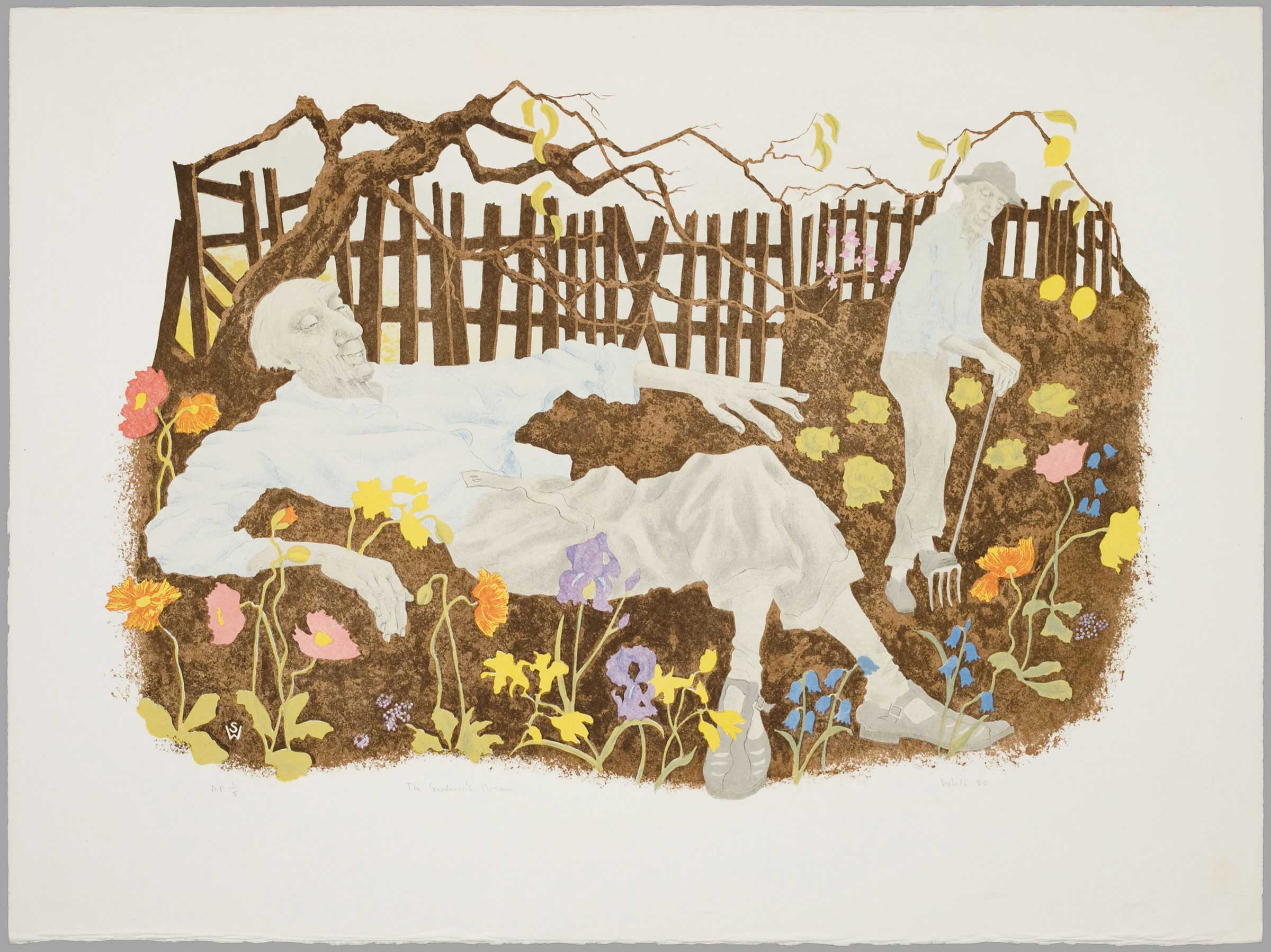
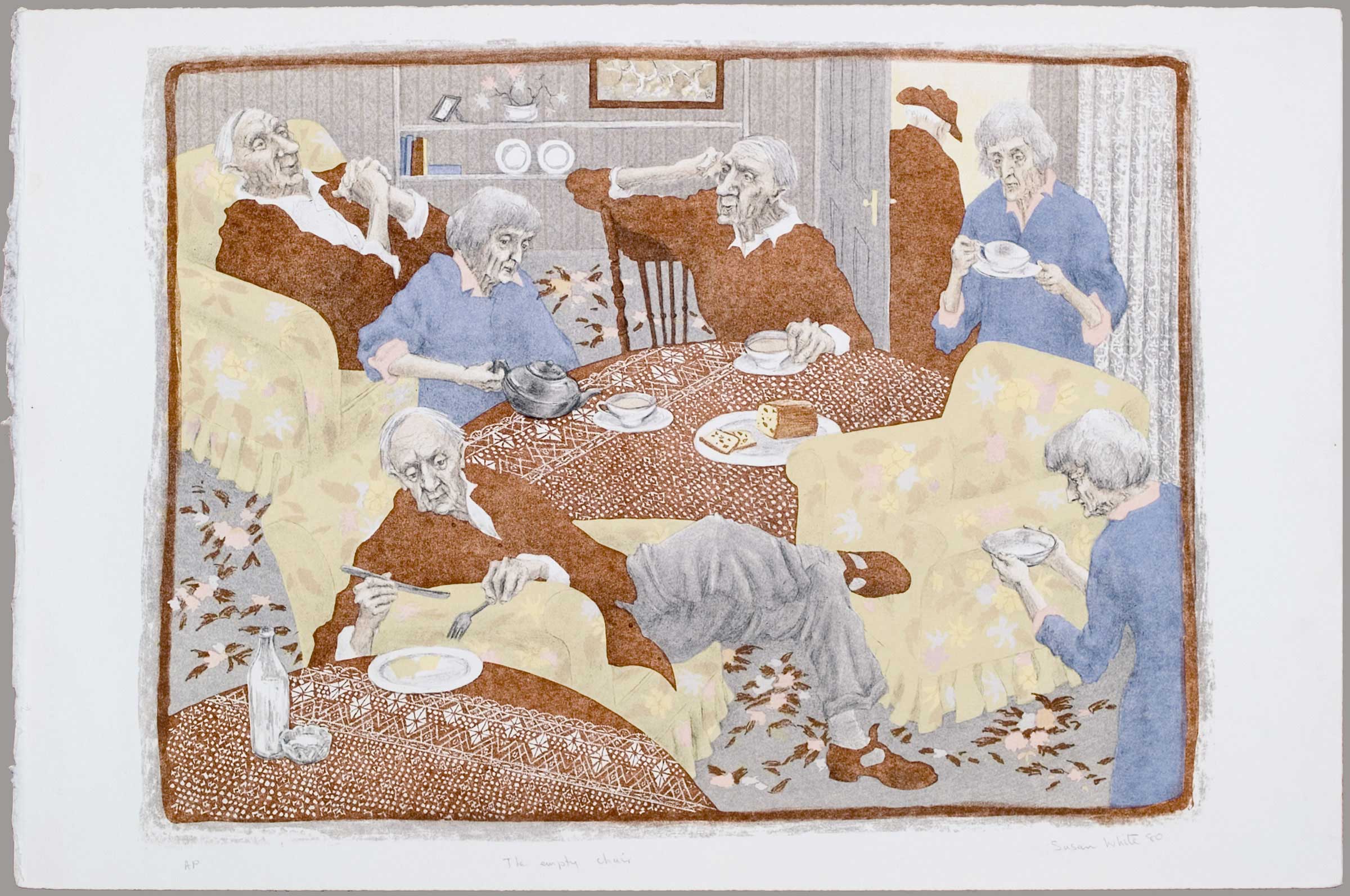
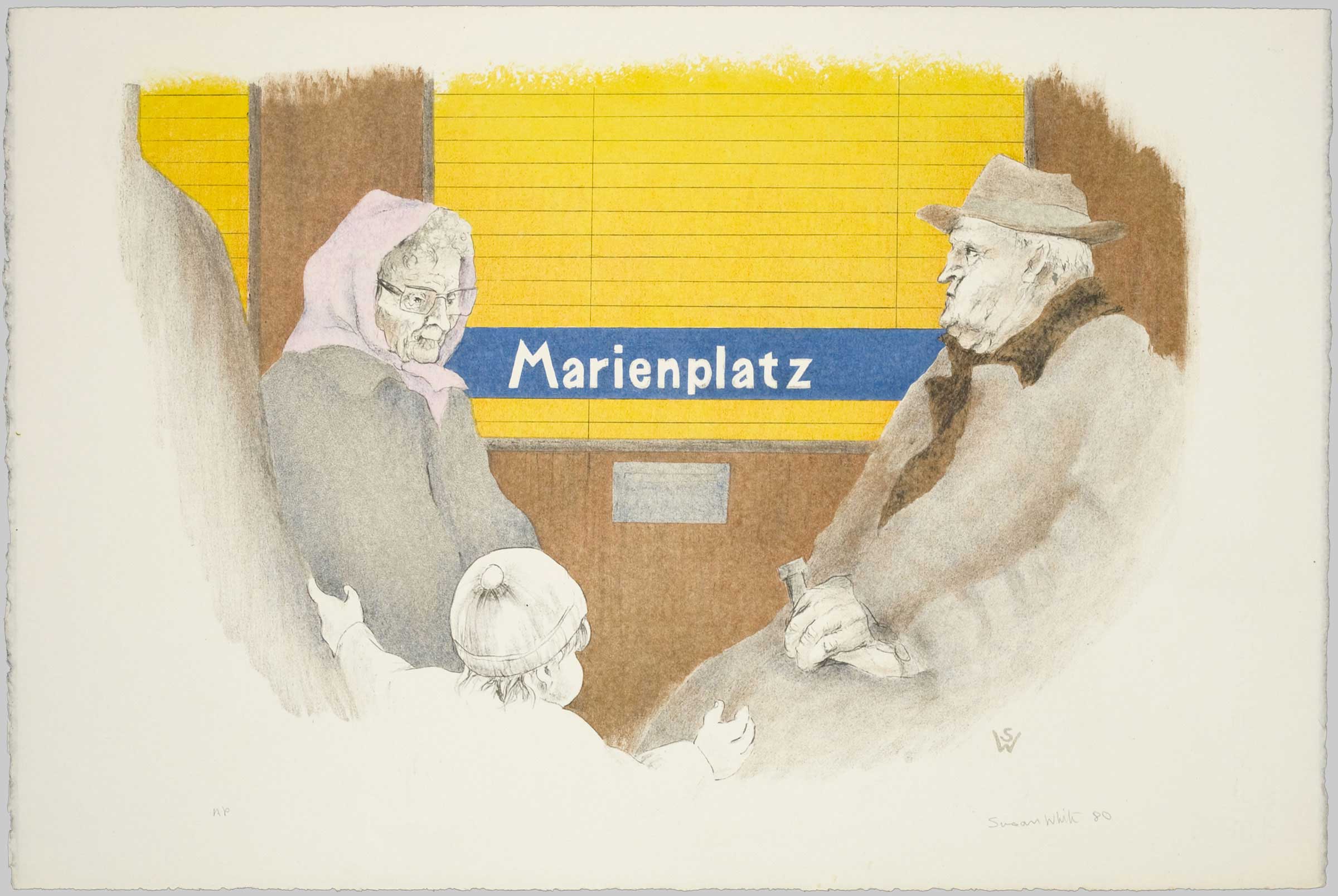
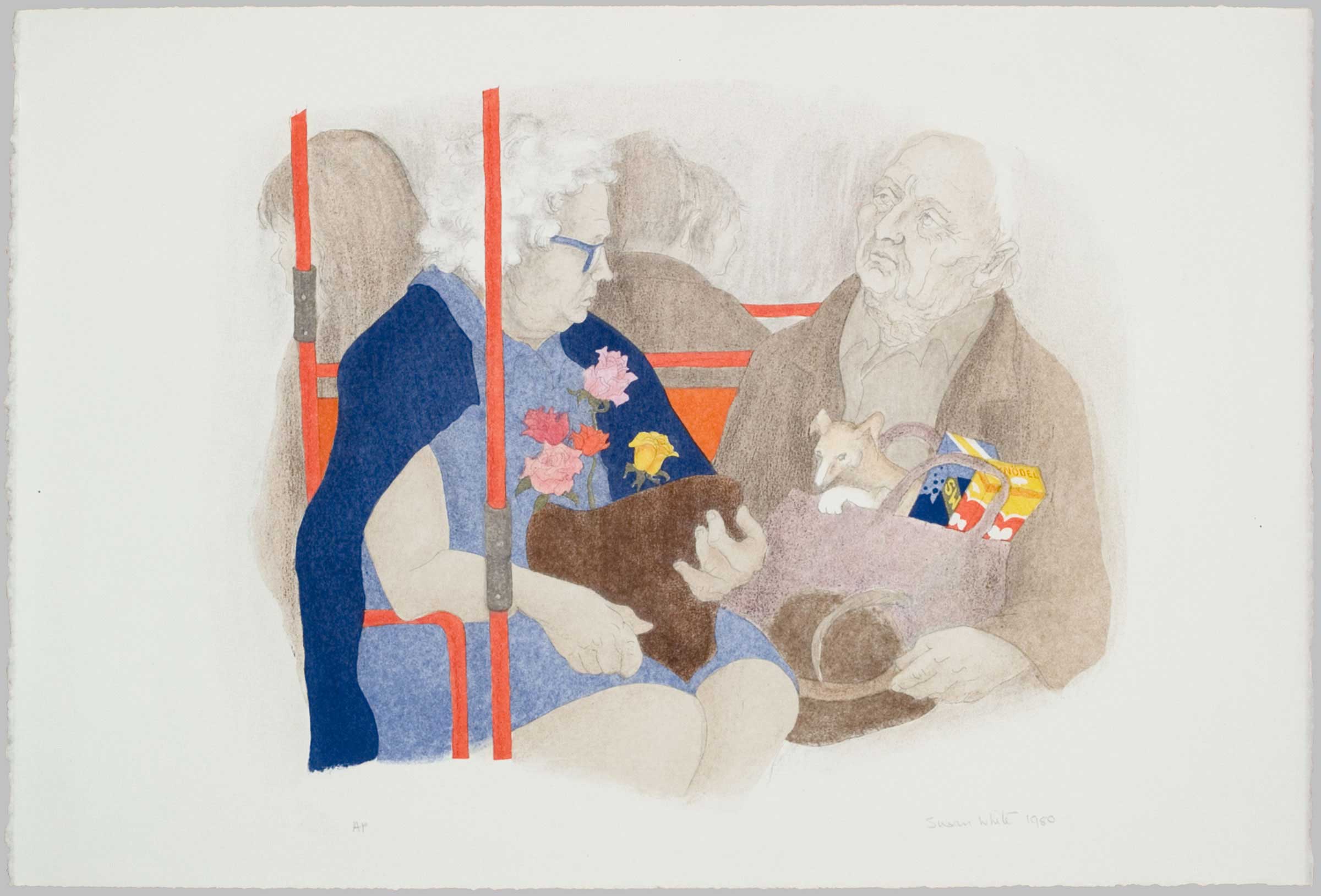
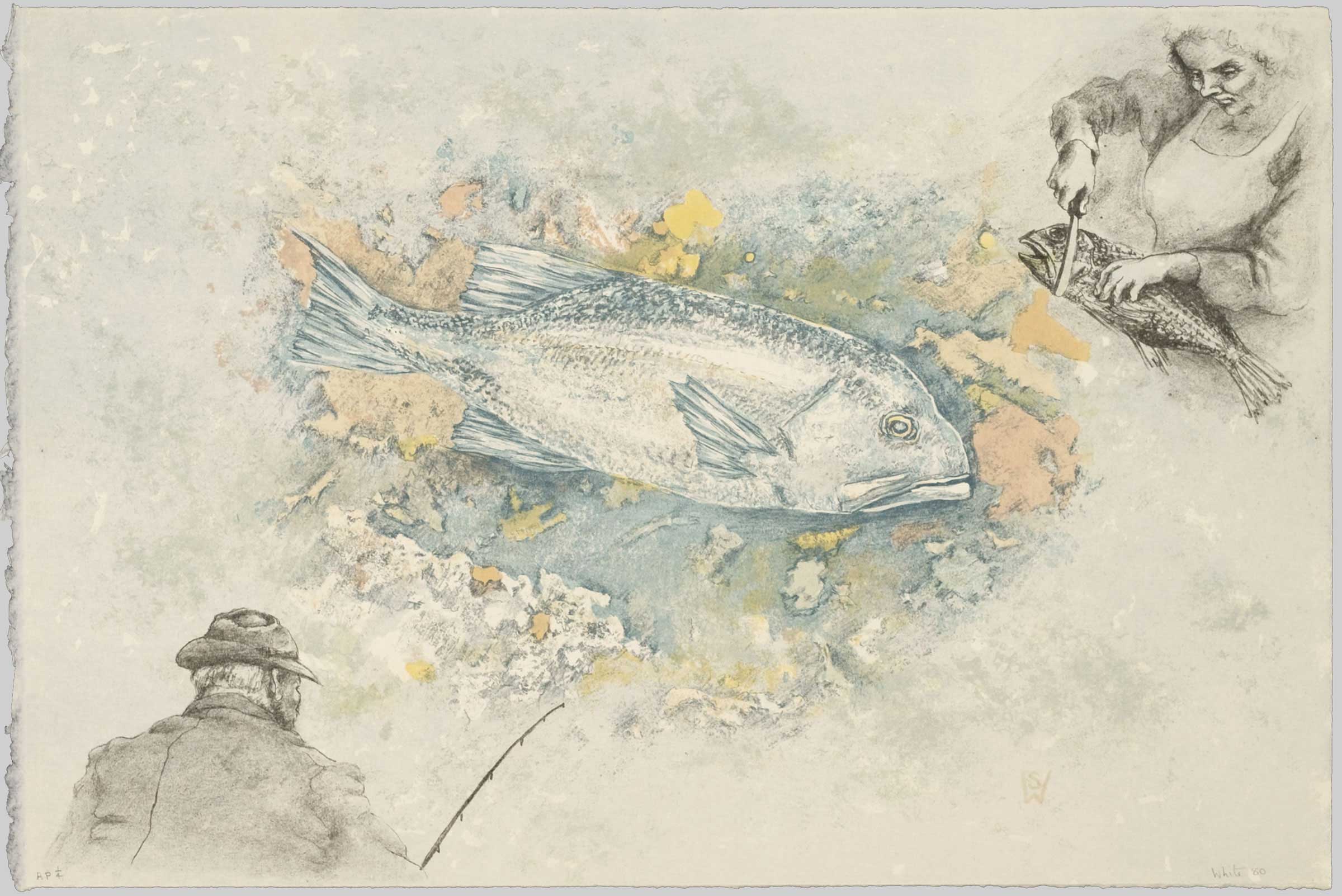
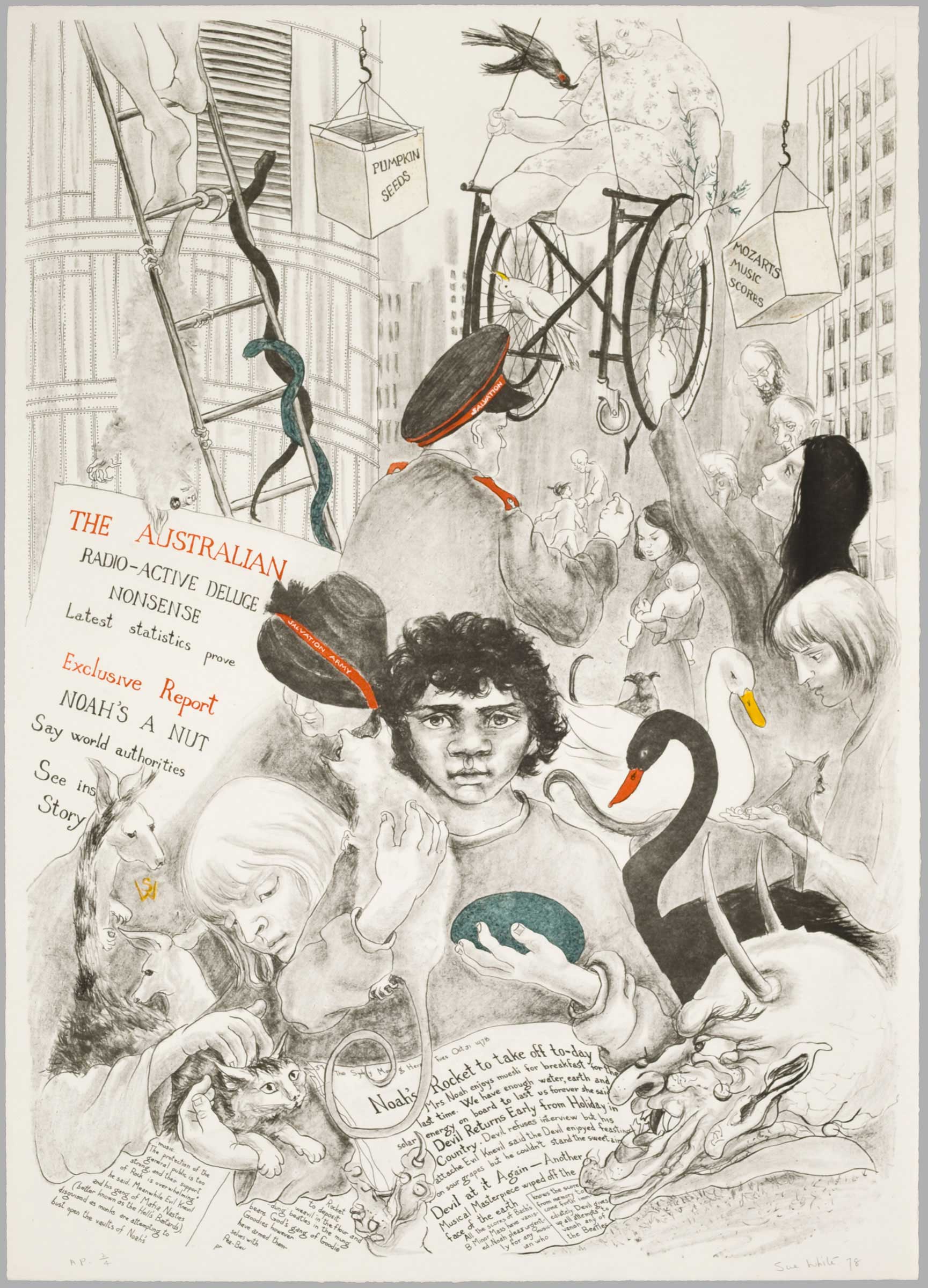
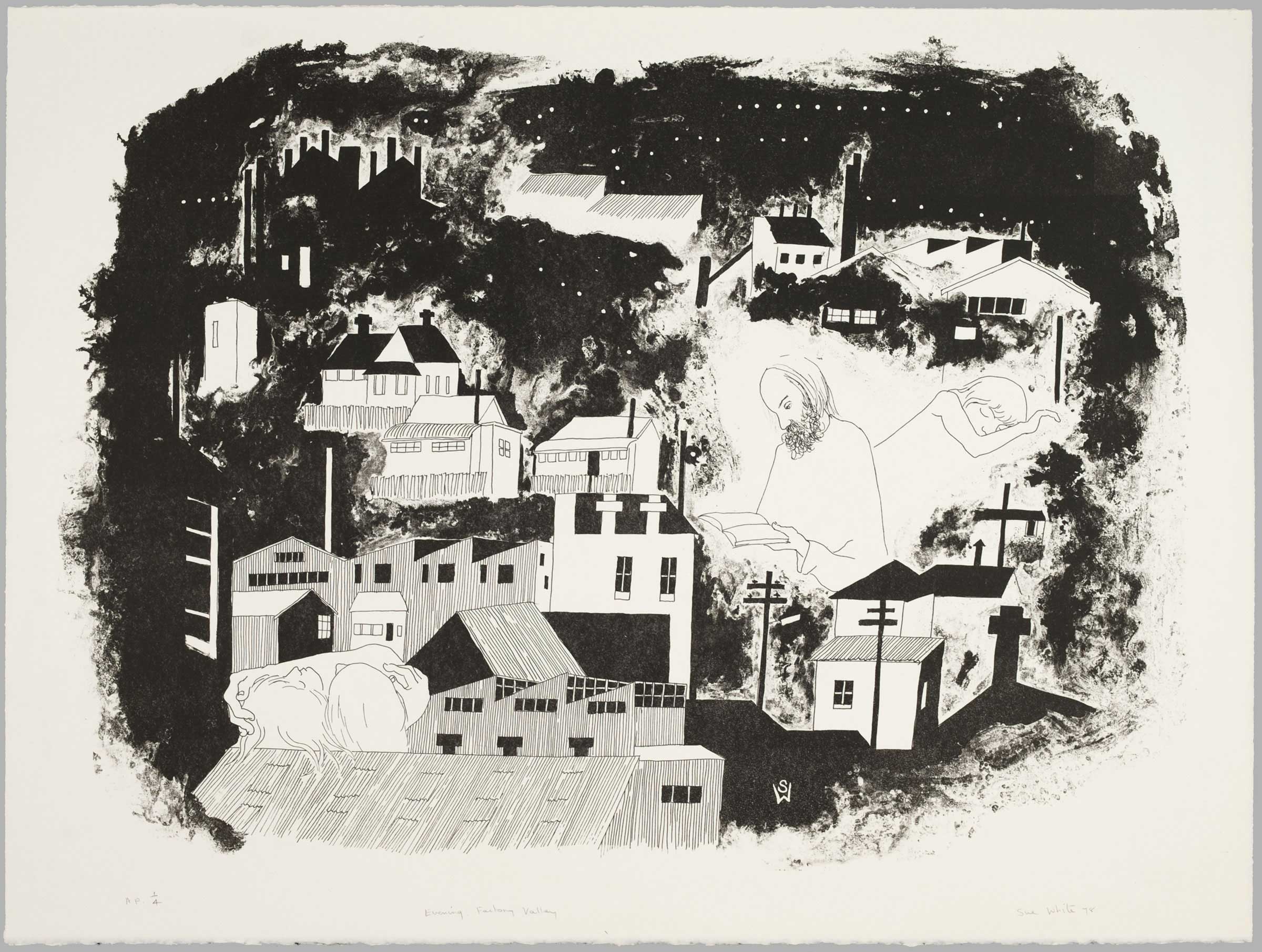
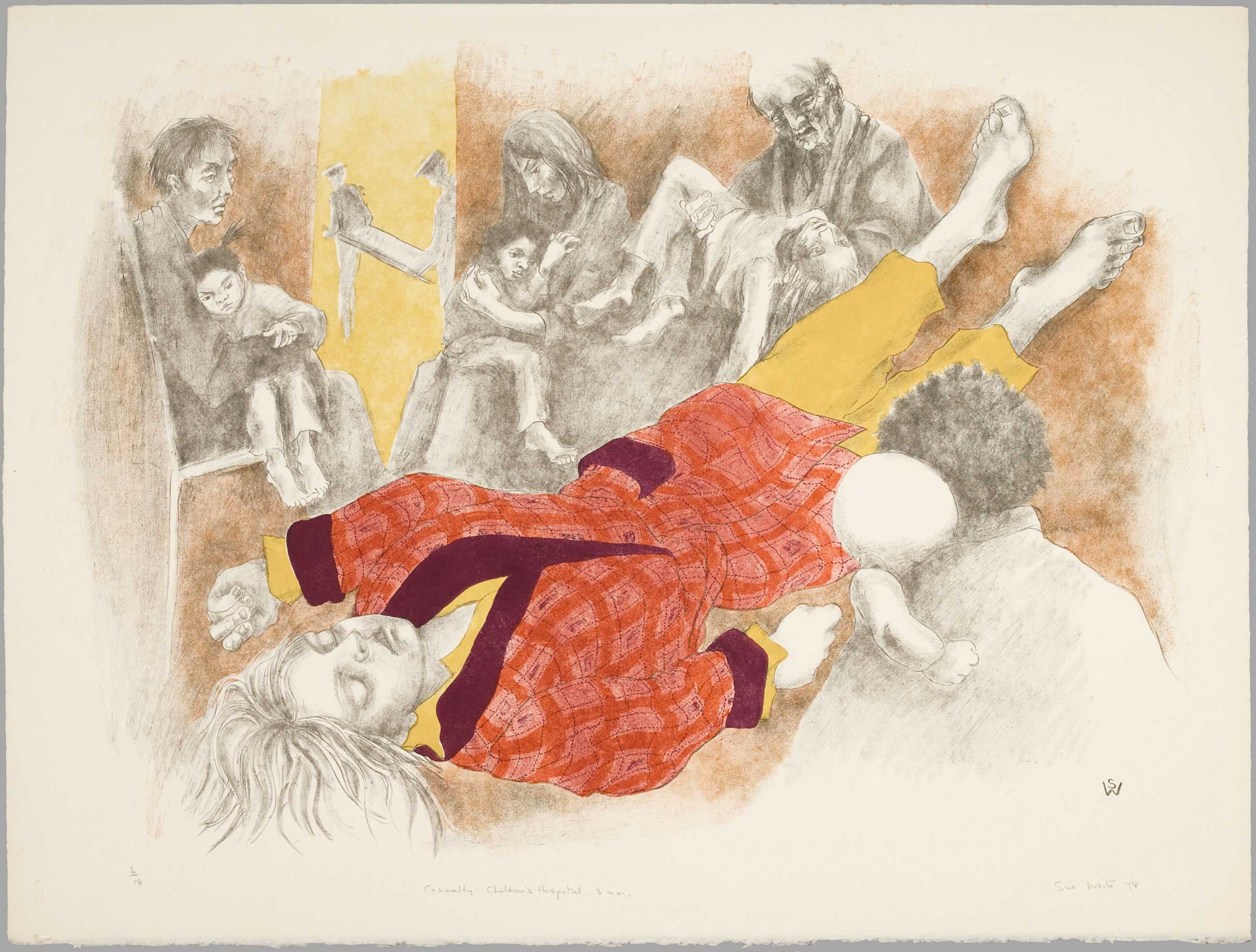
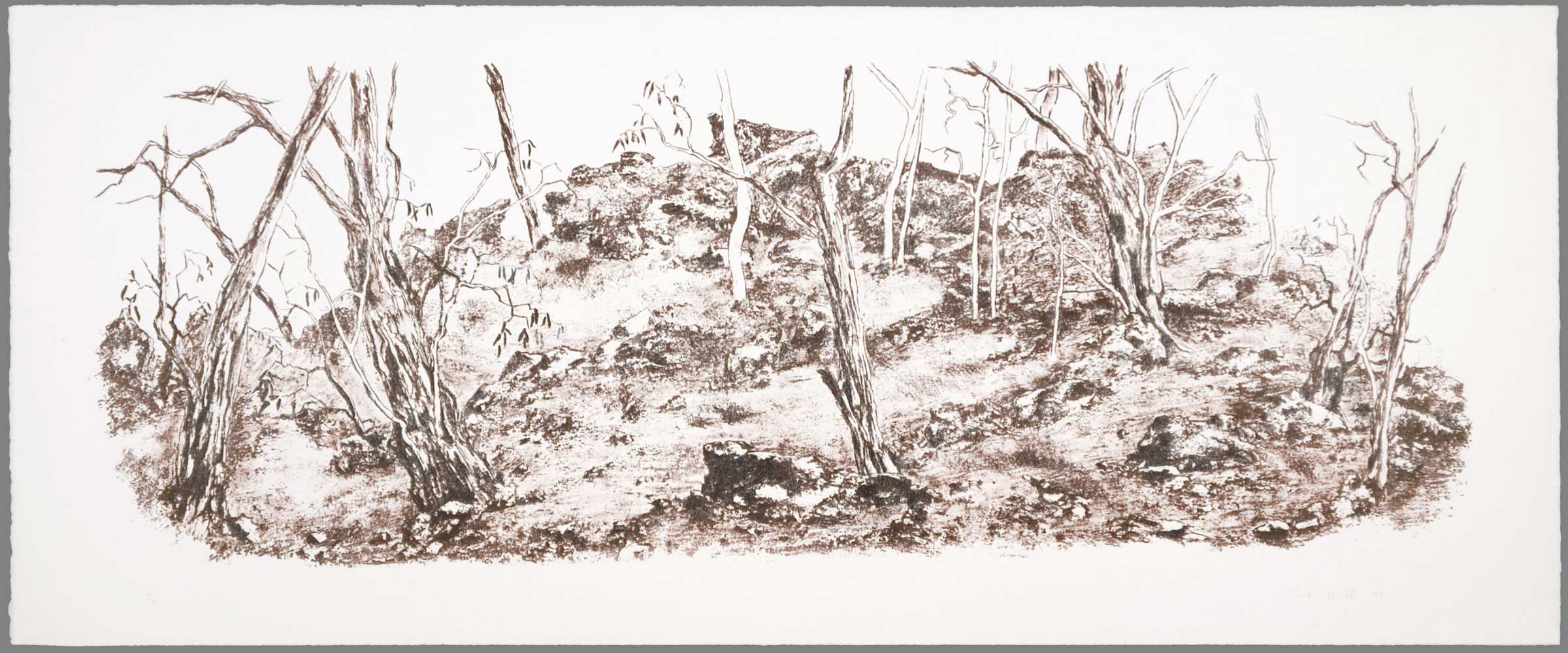
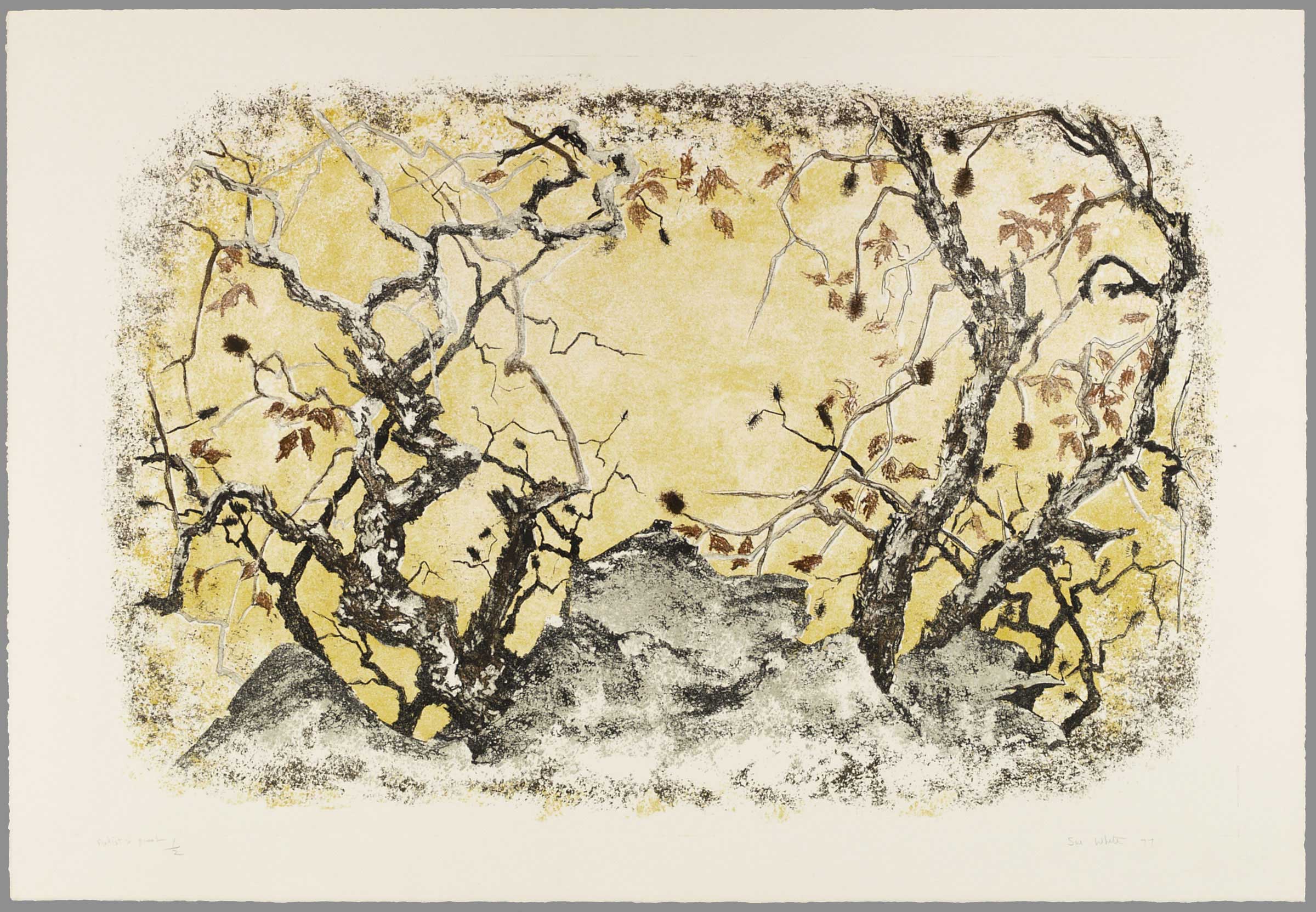
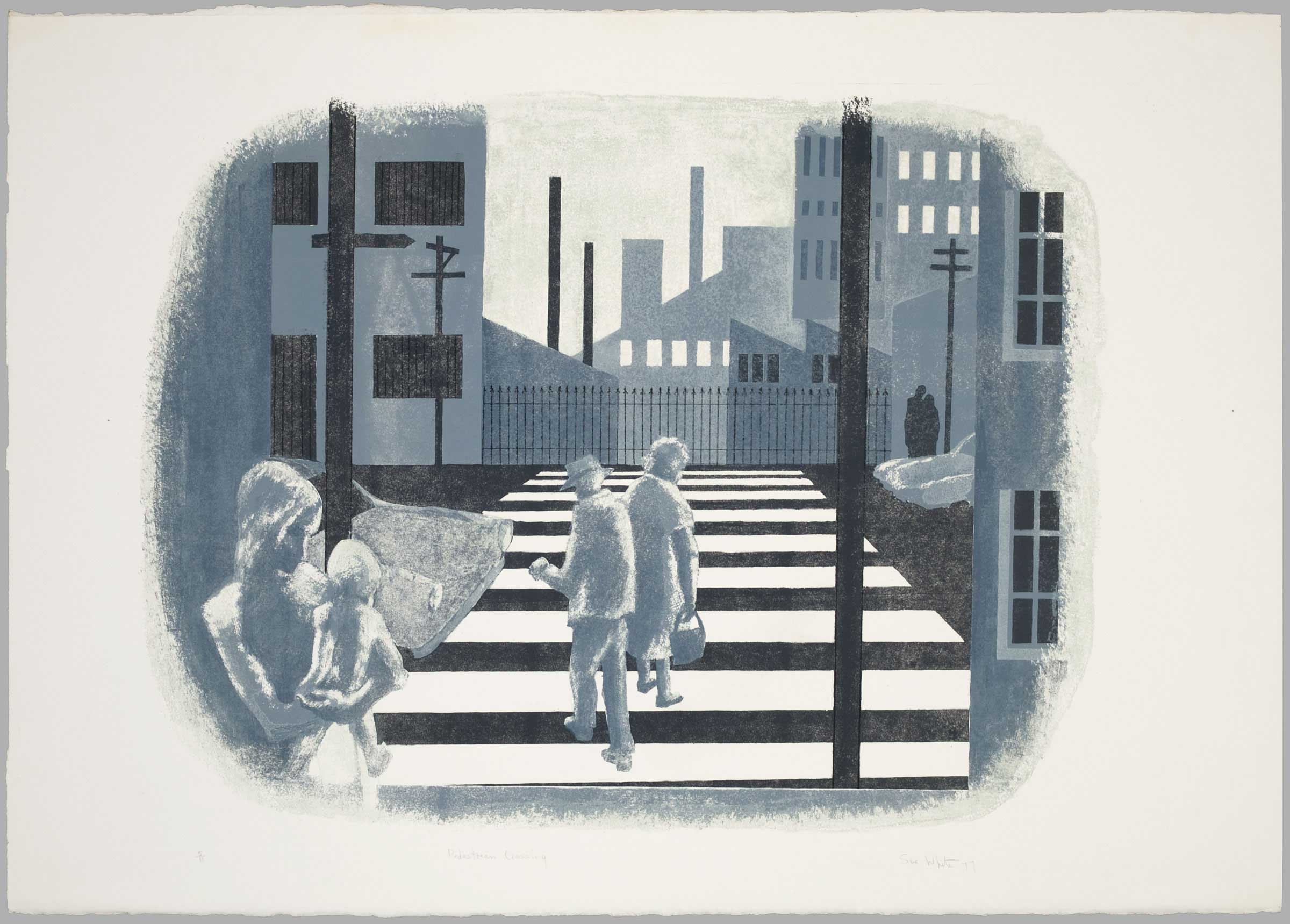
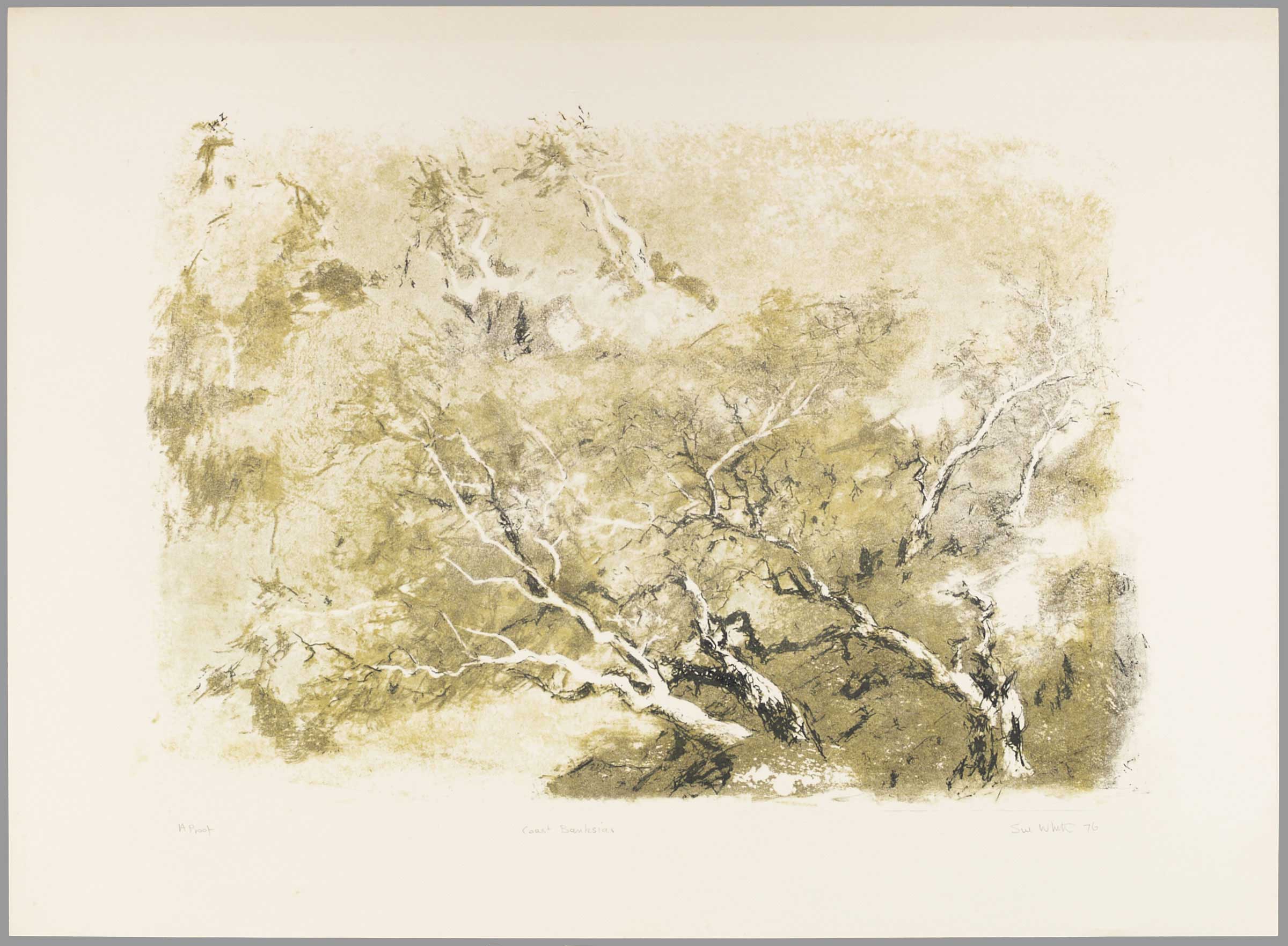
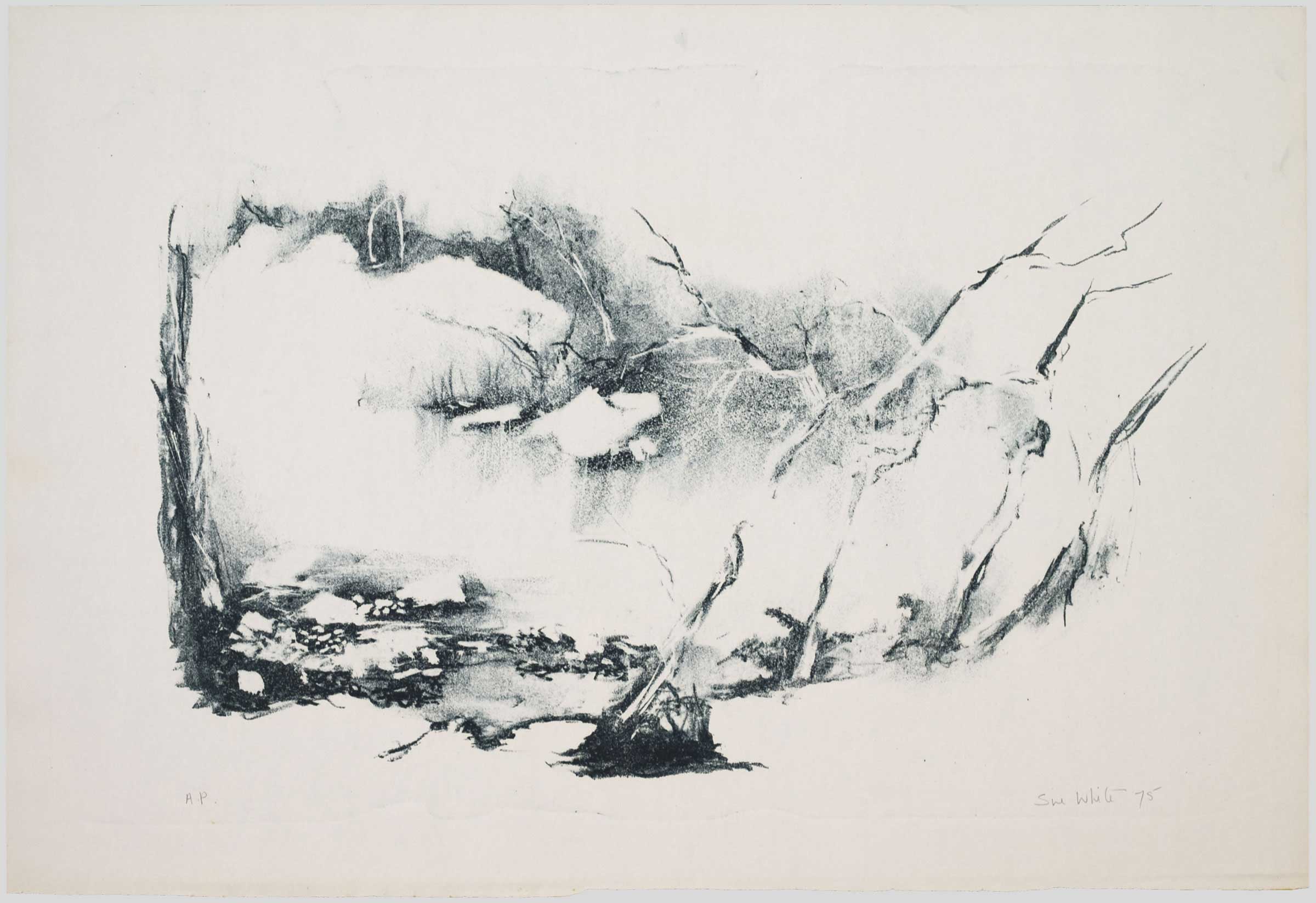
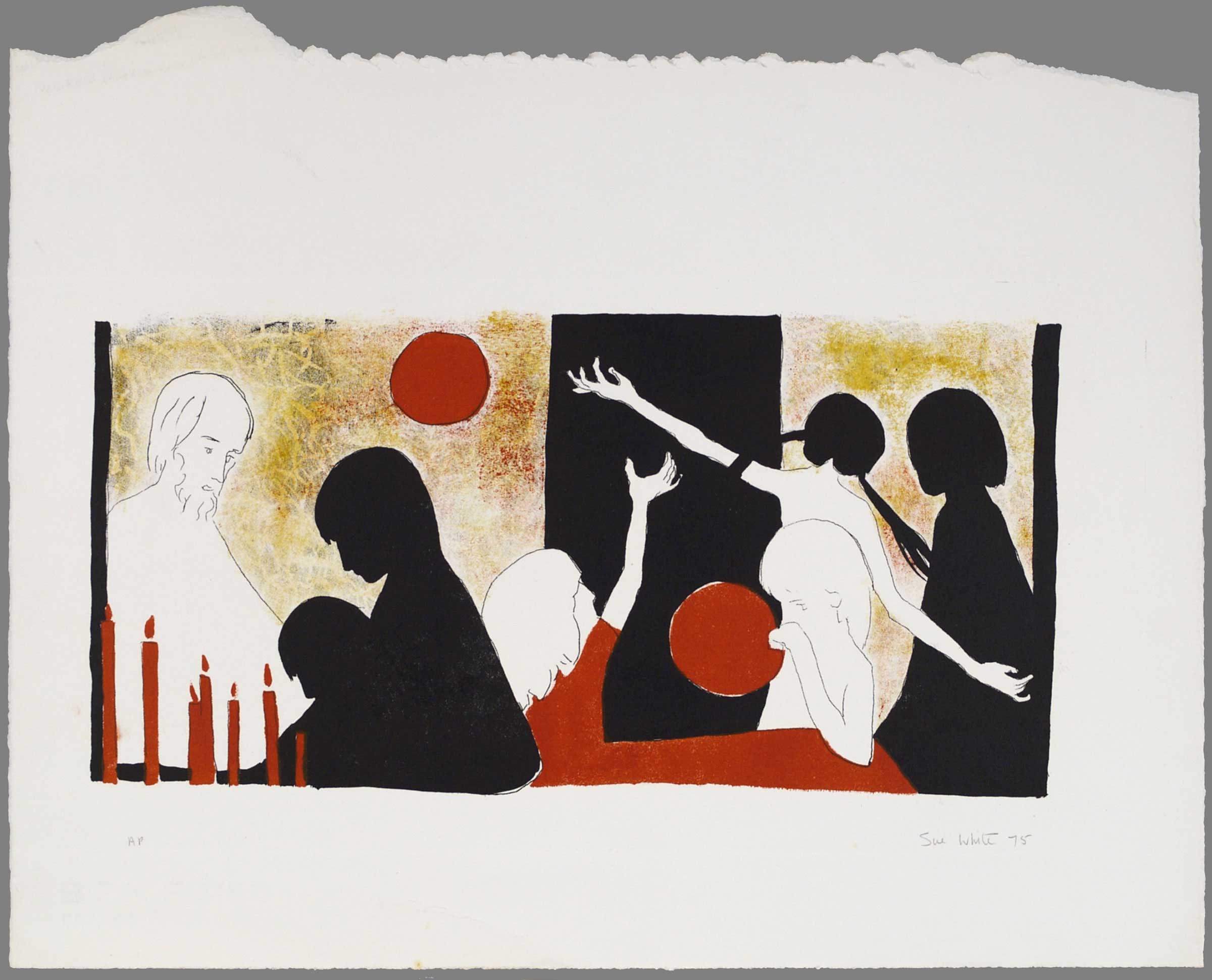
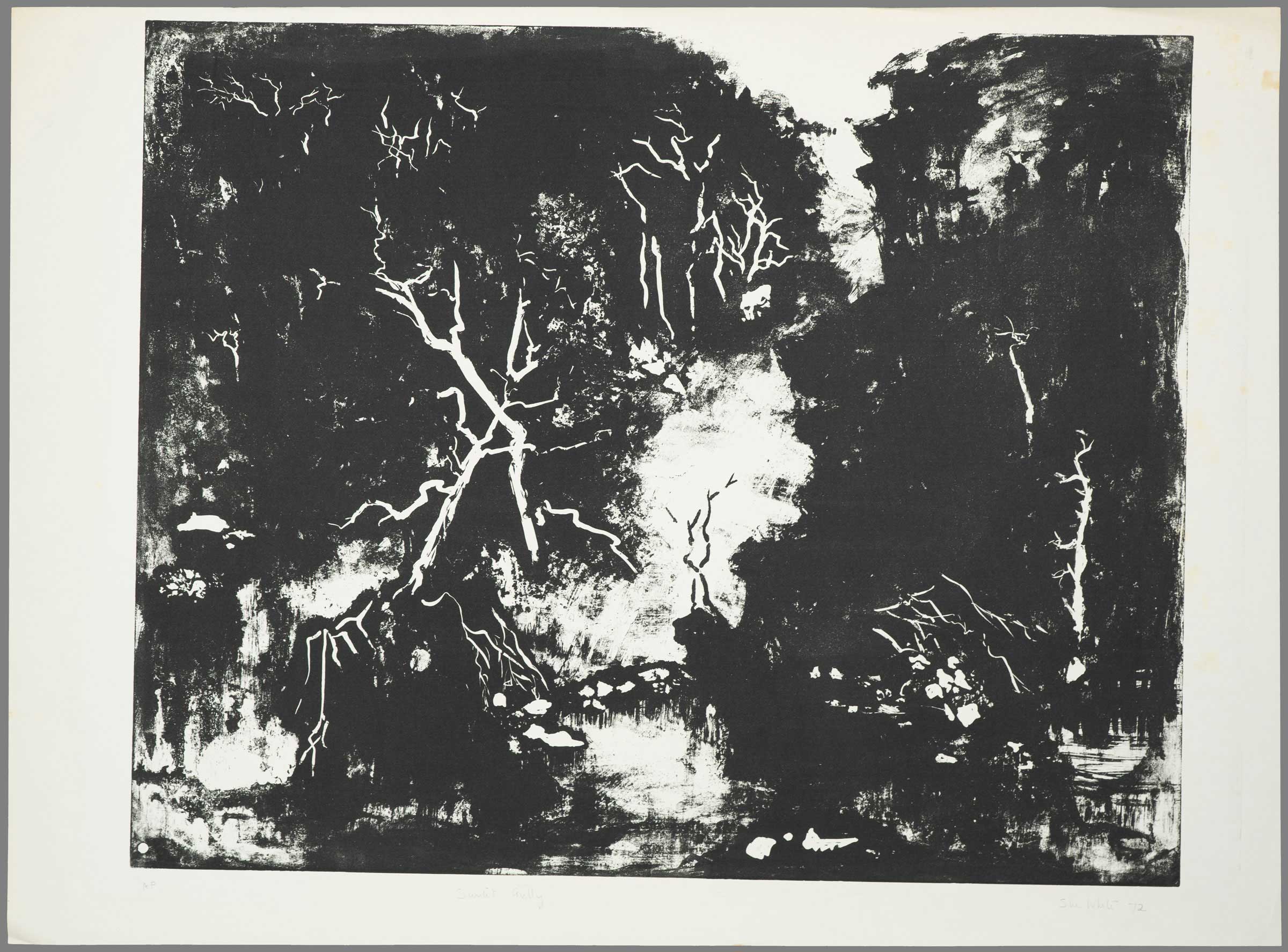
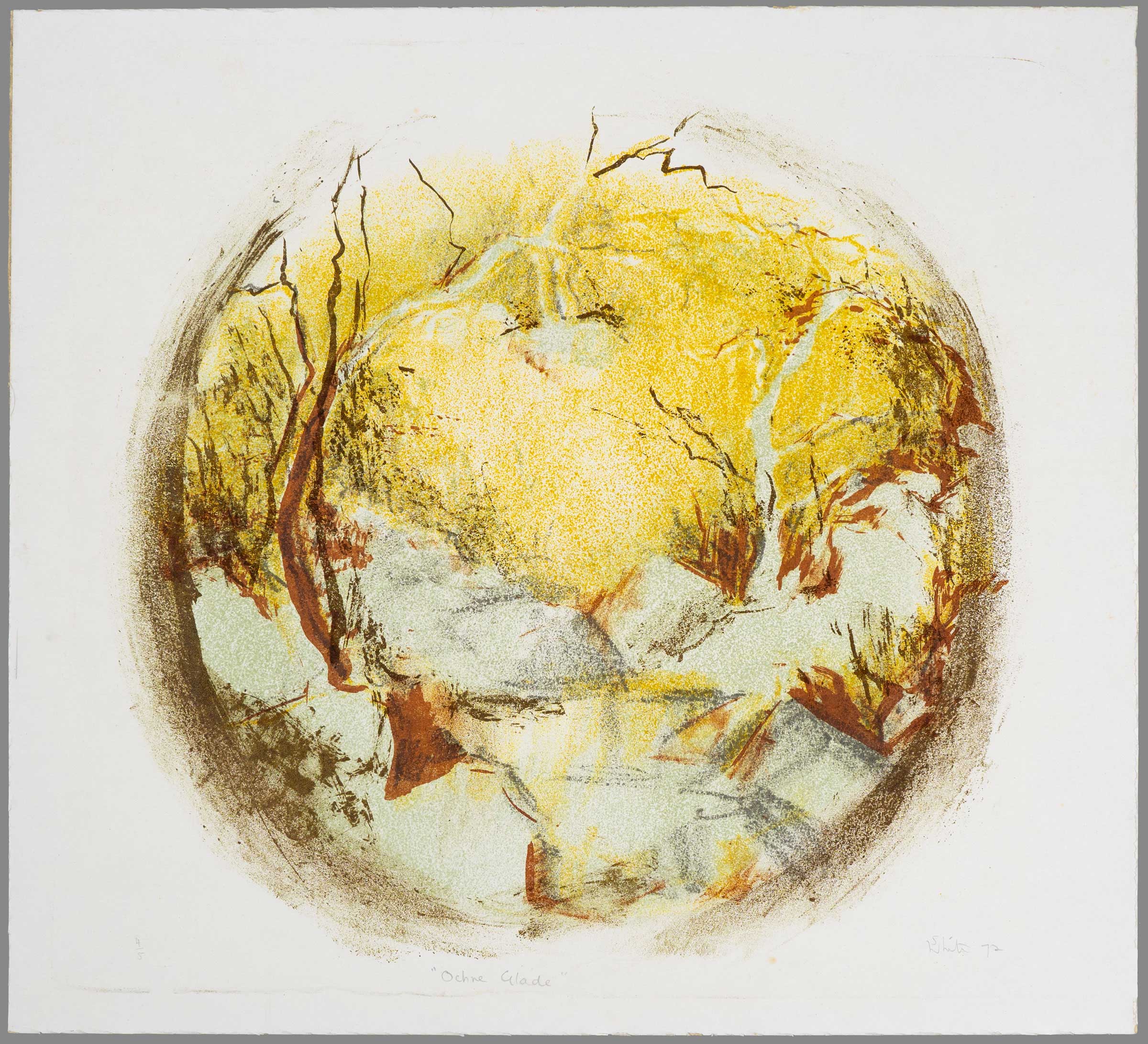
It is a rare opportunity for me, as FyreGallery director, to bring together more than 50 of White’s works on paper selected from 50 years of her multi-disciplinary art practice (from 1960 to 2010). It is a fitting tribute to an Australian artist whose skill in painting and sculpture, as well as printmaking, make her total body of work to date one of the most important by any Australian artist of the late modern period. White, who has a considerable international profile as a printmaker from showing in over 60 juried print biennales and exhibitions from 1980 to 2000, should be much better known in her own country This current exhibition, representing a third of her printmaking oeuvre, is a chance to give her prints a higher profile in Australia. What makes White’s prints so engaging, so vital and so interesting is the fundamental brilliance of her drawing. I believe White deserves to be seen and recognised as one of the most productive, courageous and brilliant printmakers of her generation. I hope this show will inspire artists and collectors who have a passion for beautifully crafted prints that challenge their viewers to do more than just look at look at them.
Finally, this is a survey show, not a retrospective, because we who love her work hope she will continue making it for many years yet. The omens are good. White went on record recently saying,
I work on many projects at the same time. Among the works presently on the go are carvings in sandstone, wood, and marble, mixed-media sculpture assemblages, acrylic paintings, and works on paper. I develop my ideas through drawing – my sketchbook is always at hand to capture what I see and jot down ideas. My imagination increases with my age and I have too many ideas to bring them all to fruition.
So we continue to watch for her sketchbook and wait to see what will come after the 2010 prints. I find it hard to imagine how they will best the ones in this show.
Cheryl Hannah, Braidwood, September 2010
- This note draws heavily on biographical information provided on White’s website and is quoted with permission. http://www.susandwhite.com.au/artworks_prints.html
- White’s lithographic print “Octopus” was used as the design for the invitation to the 1982 show
- Shugart, Helene A. ‘Postmodern irony as subversive rhetorical strategy’, Western Journal of Communication, vol. 63, no. 4, 1999, pp. 433–455
- Dorothy Roatz Myers, Art Talk, New York, 1994
- Ed McCormack, critic, New York, Sept. 1998
- http://www.susandwhite.com.au/news.html#DLDV

.jpg)
.jpg)
.jpg)
.jpg)
.jpg)
.jpg)
.jpg)

.jpg)

.jpg)
1.jpg)
.jpg)
.jpg)




.jpg)
.jpg)



.jpg)

.jpg)